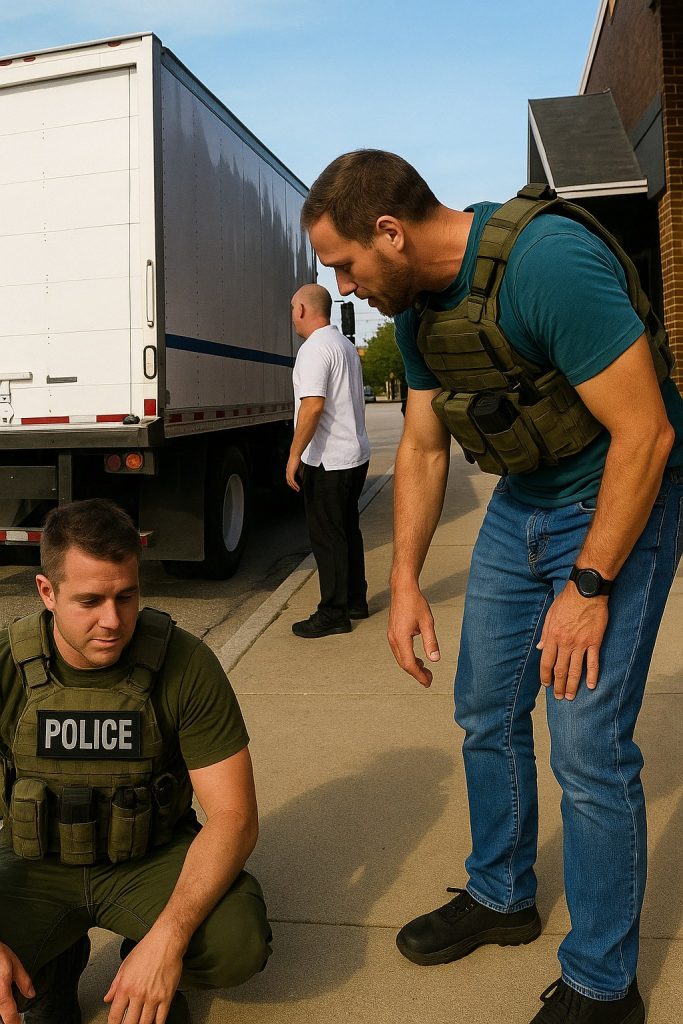
In a tragic turn of events, recently released bodycam footage has contradicted the official account provided by the Department of Homeland Security (DHS) concerning the shooting of a Mexican father by Immigration and Customs Enforcement (ICE) agents in a suburb of Chicago earlier this month. The shocking visuals not only reveal a starkly different narrative but have also incited public outrage and demands for accountability.
Rep. Delia Ramirez, a Chicago-based lawmaker, has emerged as a vocal critic of the government’s actions, asserting, “DHS lied about what happened.” Her comments echo a growing frustration among community members who argue that the government’s failure to provide a truthful account has further exacerbated the trust deficit between immigrant communities and federal law enforcement.
According to initial reports, ICE claimed that the shooting was a response to an alleged threat posed by the victim, identified as 35-year-old Manuel Guzman. However, the newly surfaced video footage shows moments leading up to the incident, raising significant questions about the necessity and justification for the lethal force used by officers. Witnesses have also come forward, stating that Guzman was unarmed and posed no immediate danger at the time of the encounter.
Community activists have rallied around Guzman’s family, demanding answers and justice. “This isn’t just a case of a bad shooting; it’s a reminder of the flawed practices of ICE and how they interact with our communities,” said Maria Morales, a local community organizer. “We’ve seen far too many instances where immigrants are treated as threats rather than members of our society.”
The bodycam footage, released by local police following public pressure, is expected to play a crucial role in ongoing investigations by both the local authorities and federal oversight bodies. Experts have noted that incidents such as this present a troubling pattern in which ICE operations often escalate into violence, disproportionately affecting immigrant communities.
The incident has reignited debates surrounding immigration enforcement policies and the level of transparency that U.S. law enforcement agencies must uphold. Critics are calling for significant reforms, including a thorough review of ICE’s operational protocols and enhanced training to prevent future tragedies.
As the community grapples with the implications of this event, various organizations are mobilizing to provide legal assistance and support to the Guzman family. The case is poised to become a pivotal moment in the ongoing struggle for immigrant rights, especially within the context of police accountability and governmental transparency.
“This is a moment for our community to stand up and demand change,” Ramirez emphasized, highlighting the collective effort required to advocate for justice. “We must ensure that no family has to endure the same pain and loss that the Guzman family is facing right now.”
As investigations unfold, many hope that the truth will prevail and lead to systemic changes that protect immigrant families from unnecessary violence and foster a safer environment for all residents.