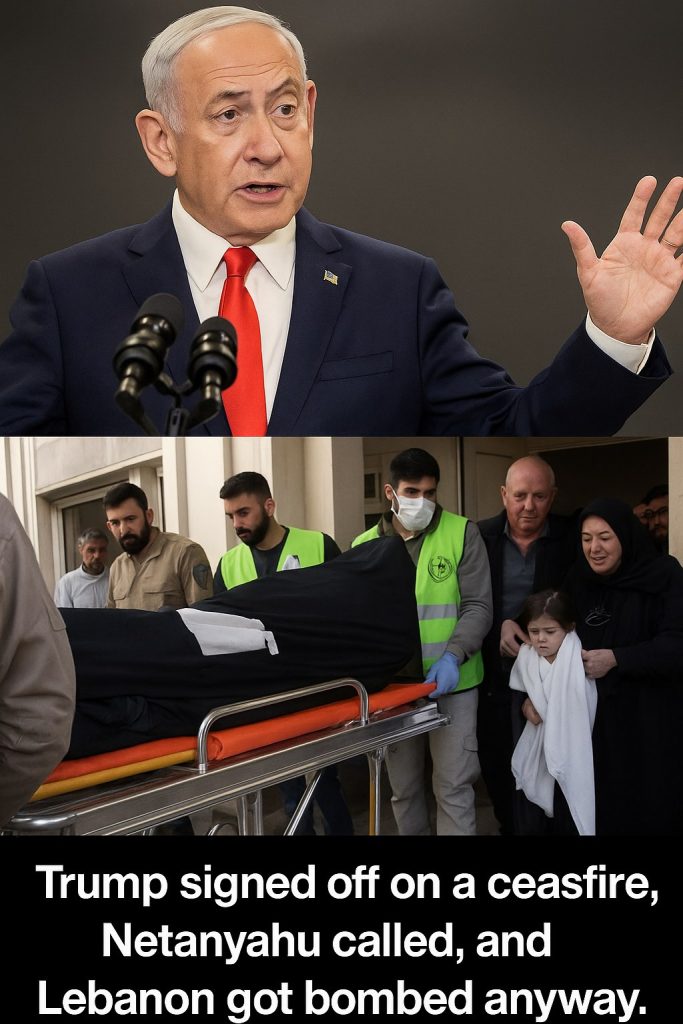
Lebanon’s darkest day in recent history unfolded just twelve hours after the United States and Iran announced a ceasefire agreement, as Israel launched an unprecedented bombing campaign that claimed over 300 lives within ten minutes. The day, now known as Black Wednesday, saw more than 1,150 injured and widespread destruction across Lebanon, marking the deadliest single bombardment in the nation’s history.
At the heart of the tragedy are horrifying accounts of innocent civilians caught in the crossfire. Buildings collapsed during lunchtime, trapping families and workers inside, including those at a coffee roastery located far from any known military targets. Children leaving school and mourners attending a funeral in the Beqaa Valley were also victims of sudden airstrikes. Entire families were pulled from the debris in heart-wrenching rescue efforts.
International observers and local leaders have expressed shock and outrage, especially given the timeline. Pakistan’s Prime Minister stated the ceasefire explicitly included Lebanon, a position echoed by Iran. CBS News reported that then-President Trump initially acknowledged Lebanon as part of the ceasefire but reversed his stance after speaking with Israeli Prime Minister Benjamin Netanyahu. Despite Trump’s approval of the ceasefire, Israel proceeded with the brutal attacks.
Strategic infrastructure has also been targeted with devastating effect. Israel has destroyed seven critical bridges over the Litani River, severing southern Lebanon’s connection to the rest of the country. This move has contributed to a rapidly worsening humanitarian crisis, with over one million people—approximately 20% of Lebanon’s population—displaced from their homes.
The World Food Programme (WFP) warns the disaster has escalated from a displacement emergency into a food security crisis. An overwhelming 80% of markets in southern Lebanon have shut down, leaving many residents without access to food and essential supplies. A recent WFP convoy journey that typically takes two hours stretched to fifteen, underscoring the immense logistical challenges faced by aid organizations.
Hospitals and healthcare facilities are critically undersupplied, running dangerously low on insulin, dialysis supplies, surgical materials, and blood products. The World Health Organization (WHO) has issued urgent warnings that these critical medical supplies may run out within days, further endangering thousands of vulnerable patients.
Since March 2nd, the conflict has claimed more than 1,530 lives in Lebanon alone, including at least 130 children. The toll on healthcare workers has been catastrophic as well, with over 57 medical personnel killed, many in attacks targeting ambulances, Civil Defense centers, and hospitals. Investigations by Human Rights Watch found no evidence these healthcare sites were ever used for military purposes, raising serious legal and ethical concerns.
The declared ceasefire—initially hailed as a beacon of hope—has effectively excluded Lebanon, with devastating consequences. Hundreds perished on the very day it was announced, a grim reminder of the fragile nature of peace in the region and the human cost of political maneuvering.
As Lebanon grapples with this immense tragedy, the international community faces mounting calls for accountability, a renewed push for inclusive ceasefire agreements, and immediate humanitarian aid to prevent the ongoing crisis from spiraling further out of control.
Where to Learn More
- Trump and Netanyahu Clash Over Lebanon Ceasefire – CBS News
- Lebanon Faces Escalating Food Security Crisis – World Food Programme
- WHO Warns Critical Medical Supplies Running Out in Lebanon – World Health Organization
- Human Rights Watch Documents Attacks on Healthcare in Lebanon – Human Rights Watch
- Black Wednesday: Lebanon’s Deadliest Bombing – Al Jazeera