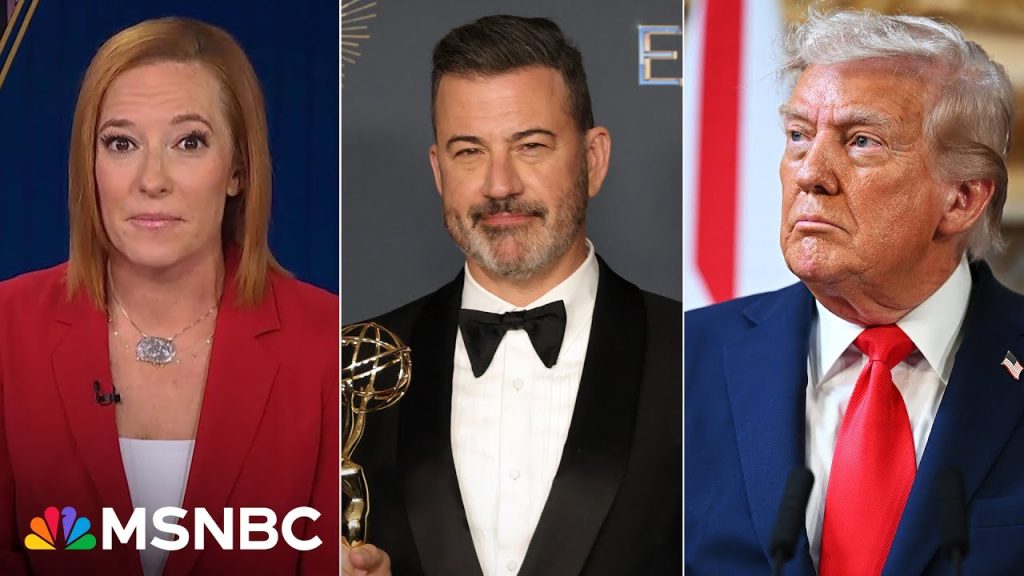
In the latest political conversation circulating on social media, the suspension of comedian Jimmy Kimmel has sparked discussions that extend far beyond the world of late-night television. In a recent analysis, Kimmel’s suspension from ABC is interpreted as part of a larger narrative involving corporate powers colluding with political interests to reshape American media and curtail dissenting voices.

The video titled “Bigger than Kimmel” claims that beneath the surface of Kimmel’s suspension lies a complicated relationship between the Trump administration and media executives. According to the discussion in the video, the quick assumption that Kimmel’s suspension was strictly due to his comments surrounding conservative commentator Charlie Kirk overlooks broader implications of media censorship in the current political climate.
Proponents of the video’s narrative assert that the motivation behind Kimmel’s suspension was not merely a reaction to a single monologue. Rather, it appears primarily linked to fears among network executives regarding potential retaliation from the Trump administration. Reportedly, these executives felt that Kimmel’s critiques of the administration could provoke the wrath of a president known for targeting media figures who he perceives as threats.
This phenomenon isn’t entirely new; multiple reports suggest that the Trump administration has leveraged its influence to intimidate media outlets, encouraging a self-censorship trend among comedians and news outlets alike. The narrative comes amidst a broader cultural moment where political satire plays an essential role in societal discourse, prompting a reckoning on the power dynamics between the state and media.
The events surrounding Kimmel’s suspension culminate in a larger critique of corporate media hierarchy, which critics argue often prioritizes corporate interests over the integrity of journalistic and comedic expressions. When Trump publicly derides individuals or organizations, those in positions of power may second-guess their editorial decisions out of fear of repercussions, thereby compromising democratic freedoms of speech and expression.
In this current atmosphere, where political rhetoric can take sharp turns, the implications of Kimmel’s suspension raise alarms about the future of media independence and creative expression. Observers are now pondering whether the actions against Kimmel mark a turning point, where the implications of political authority over media become increasingly visible and troubling.
As Kimmel’s case highlights a significant crossroads between entertainment and political authority, many hope it serves as a rallying point for discussions surrounding freedom of expression in comedy and media at large. The public’s reaction to these controversies will likely influence how political satire evolves in the face of increasing corporate and governmental pressures.
Where to Learn More
- Politico – In-depth coverage of politics and media interactions.
- HuffPost – Articles analyzing the intersection of comedy and politics.
- The Guardian – Commentary on political dynamics affecting media.
- Variety – Industry news including media reactions to political events.
- Rolling Stone – Culture commentary including the role of satire in shaping public opinion.