
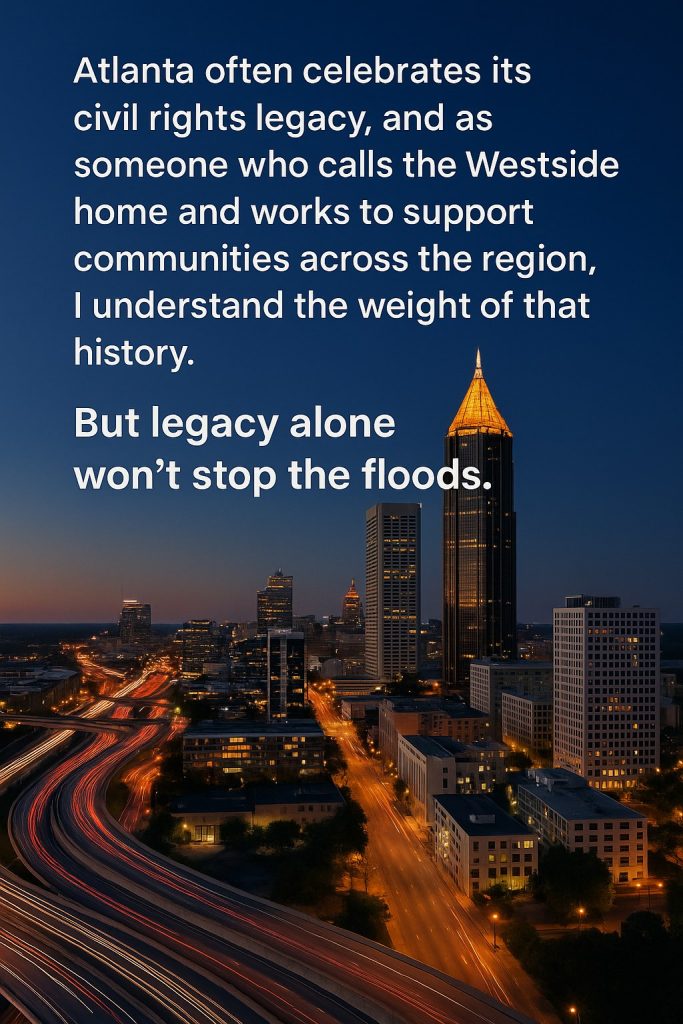
Atlanta is renowned for its pivotal role in the civil rights movement, a legacy celebrated by many who walk its streets, echoing with the voices of giants like Martin Luther King Jr. and John Lewis. However, as someone who calls Atlanta’s Westside home and actively supports communities throughout the region, I have come to realize that our rich history, while immensely important, cannot shield us from the pressing challenges posed by climate change—specifically, the devastating floods that have increasingly affected our neighborhoods.
The Westside of Atlanta, once a vibrant hub of African American culture and resilience, is now grappling with the dual burden of historical legacy and modern environmental crises. Over the past years, heavy rains and flooding have turned vibrant streets into waterways, displacing families and disrupting lives. In 2021 alone, rainstorms led to millions in property damage, as homes were inundated and local businesses suffered. For many residents, the influx of extreme weather events is more than an inconvenience; it’s a manifestation of a systemic climate crisis.
The interconnection between civil rights and environmental justice has never been clearer. Low-income neighborhoods, particularly those with a majority Black population, are often the most adversely affected by both legacy inequalities and contemporary climate issues. Communities that have historically faced systemic neglect are now left to fend for themselves in the wake of increasingly severe weather patterns.
As advocates, we cannot solely rest on the pride of our civil rights heritage. The truth is, legacy without action will not protect our families from flooding or keep our neighborhoods safe. It’s imperative that we recognize the need for robust infrastructure improvements and investment in climate resilience measures, particularly in vulnerable neighborhoods. We need to advocate for policies that prioritize the voices of those directly impacted by climate change, ensuring their needs are met and their histories acknowledged.
Local organizations and activists are rising to the occasion, calling for urgent federal and state intervention. Initiatives aimed at improving drainage systems, increasing green spaces, and implementing sustainable development practices are critical to mitigating flood risks. In addition, community engagement and education are fundamental in empowering residents to understand the environmental challenges they face and how they can participate in solutions.
Collectively, we must look toward the future with a sense of urgency and responsibility. As Atlanta grows and evolves, we must couple our pride in our civil rights legacy with the determination to protect and uplift our communities in the face of climate uncertainty. Engaging with local leaders, attending community meetings, and advocating for sustainable policies are essential steps we all can take.
Ultimately, preserving Atlanta’s rich history means ensuring that future generations have safe, thriving communities to call home. It’s not just about heritage—it’s about survival, resilience, and a united front against the floods that threaten to wash away our progress.
Where to Learn More
- Flooding Concerns in Atlanta – Atlanta Magazine
- Residents Fear Growing Risk of Environmental Disasters – NBC News
- Why Some Areas Are Flooding More Than Others – The Atlantic
- The Dangers of Environmental Inequality – Rivers Alliance
- Urban Planning and Climate Change: The Case of Georgia – NPR