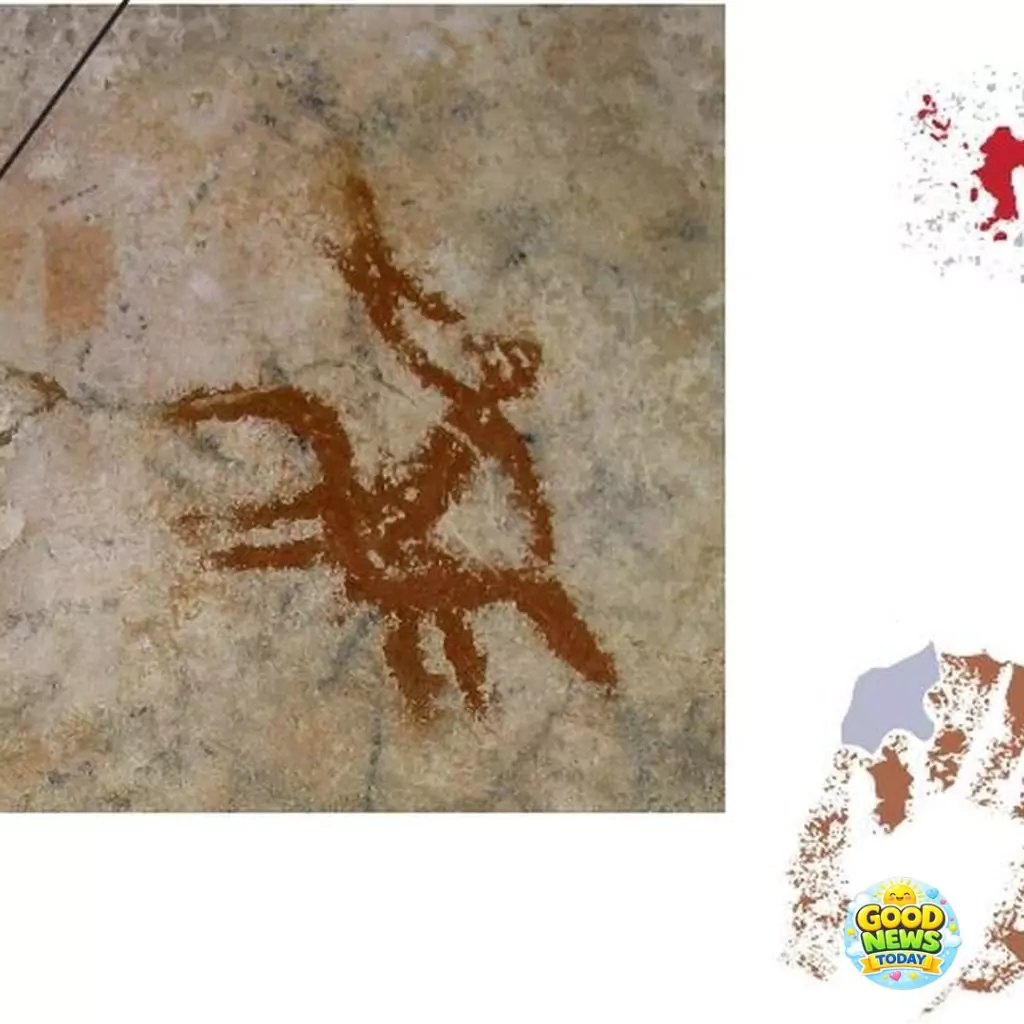
A remarkable discovery in a limestone cave in Indonesia has unveiled stylized handprints that are believed to be at least 67,800 years old, setting a new record for the oldest-known rock art in the country and indeed the world.
This find offers compelling evidence that humans have been intentionally traversing seas for nearly 70,000 years, highlighting the journeys made from the Asian continent across Australasia to Australia and beyond.
Adhi Agus Oktaviana, a researcher from the BRIN Research Center for Archaeometry, shared that these handprints are at least 16,600 years older than the previously recognized rock art from Muna Island, which was reported in 2024. Additionally, this new discovery is 1,100 years older than the handprints found in Spain, once thought to be the oldest cave art linked to Neanderthals, and 22,200 years older than the depiction of the Sulawesi warty pig, which was discovered in 2021 on the same island.
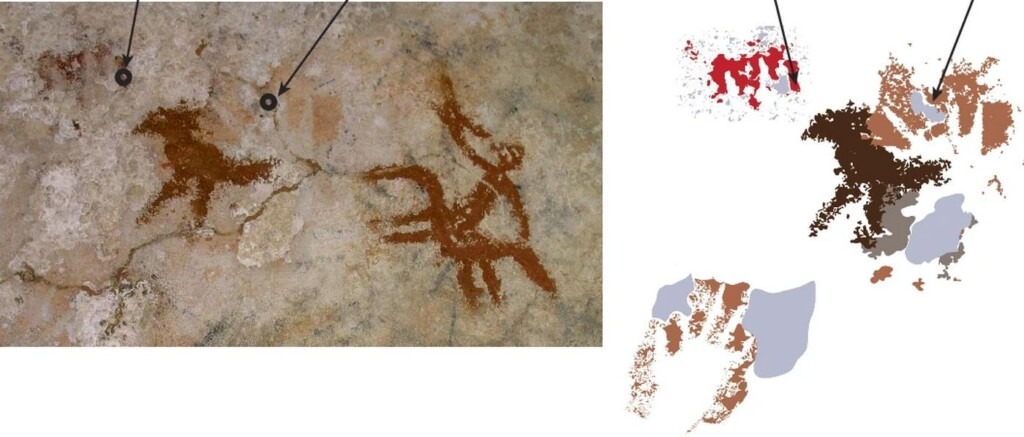
In fact, within just the last five years, three of the four oldest cave artworks ever unearthed have been found on this small island off Sulawesi, Indonesia, showcasing its significance in the history of human creativity.
To ascertain the age of this extraordinary rock art, the research team utilized the laser-ablation uranium-series (LA-U-series) dating technique on the microscopic calcite layer covering the paintings. This method provided a date that represents the earliest possible creation time of the handprints.
As highlighted in previous announcements regarding earlier discoveries, these artworks position Indonesia as a pivotal center for the early development of symbolic art and the history of human sea exploration.
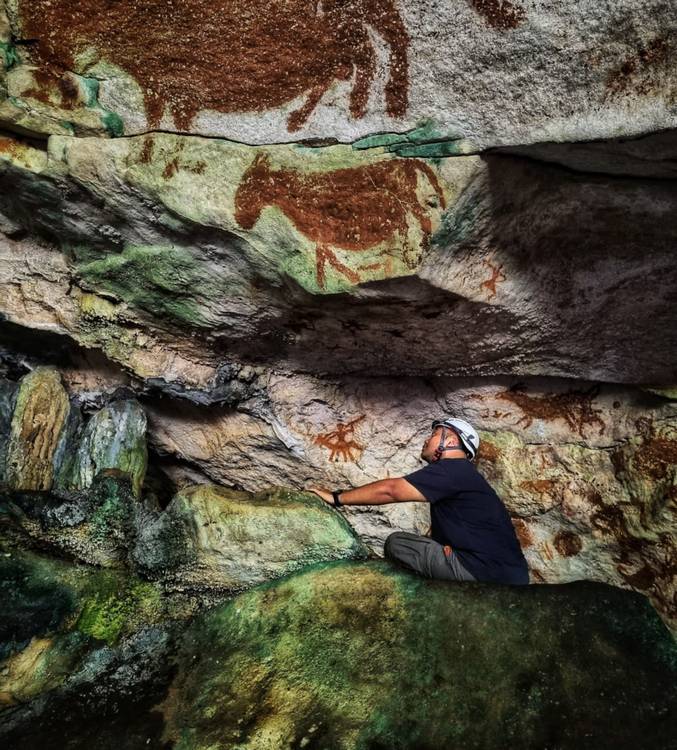
This finding reinforces the notion that Wallacea, a sunken landmass that is now part of the Indo-Pacific region, served not only as a route to Australia but also as a significant habitat for early modern humans. It supports the long-standing belief that humans made their way to the Sahul landmass (Australia-Papua) at least 65,000 years ago.
“It is highly likely that the creators of these paintings were part of a population that later migrated further east and eventually reached Australia,” Oktaviana stated. “This research provides the oldest direct evidence of modern humans following the northern migration route to Sahul, which involved sea exploration between Kalimantan (Borneo) and Papua—an area that remains relatively underexplored archaeologically.”
Adding to the excitement, Professor Adam Brumm from the Australian Research Centre for Human Evolution (ARCHE) at Griffith University noted that the handprints found on Muna Island exhibit globally unique features, including modifications that narrow the fingers to resemble claws. This reflects a mature symbolic expression. While the precise meaning behind this finger shape is still open to interpretation, it may symbolize a deep-seated relationship between humans and animals. This connection is already evident in some of the earliest paintings found in Sulawesi.