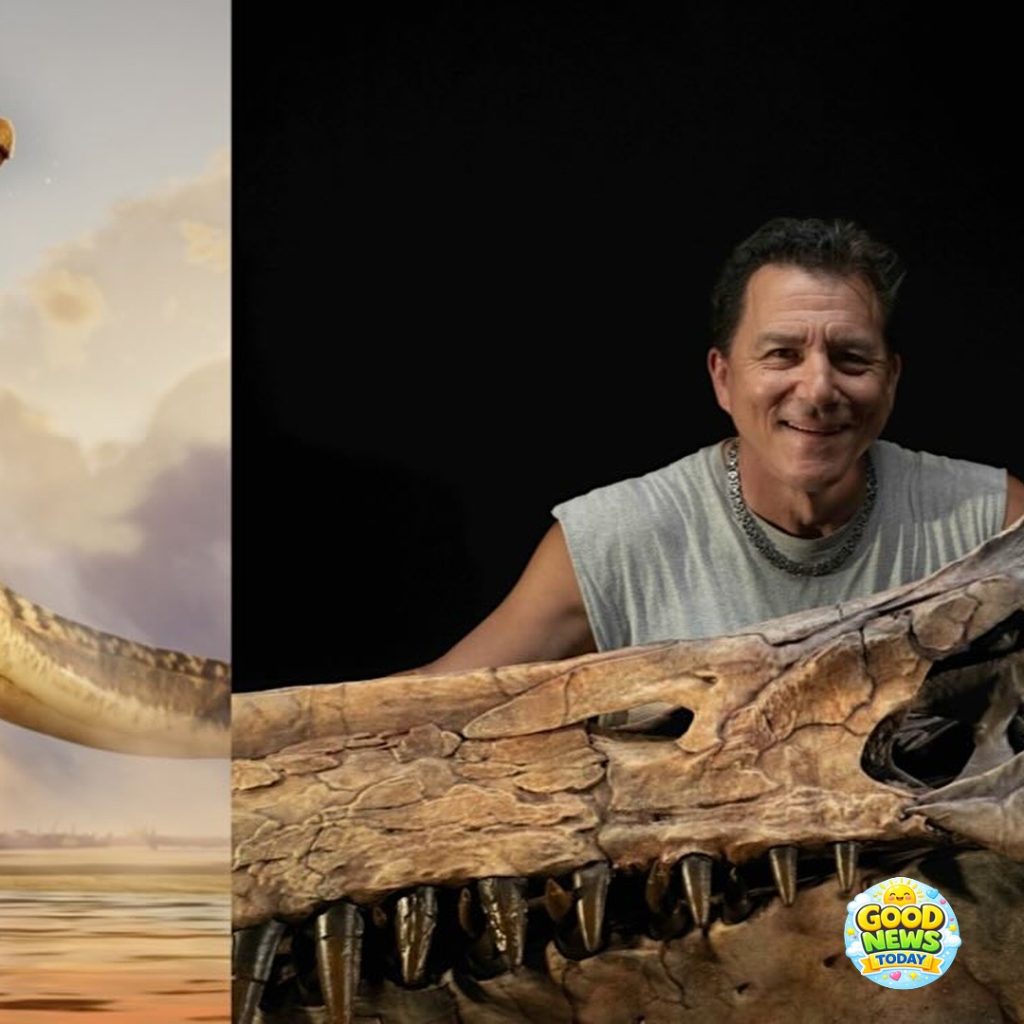
Exciting news has emerged from the Sahara Desert as scientists celebrate the discovery of a remarkable new species of Spinosaurus, marking the first conclusive evidence of this dinosaur type in over a century. This extraordinary find was made in a secluded region of the desert, igniting enthusiasm among paleontologists.
The newly identified dinosaur, named Spinosaurus mirabilis, is characterized by its unique scimitar-shaped crest and has been likened to a “hell heron” due to its fish-eating habits, despite being located hundreds of miles from any ocean.
Paleontologists believe that this fascinating creature was a wading predator, similar to its relatives, thriving over 600 miles away from the Tethys Sea in what is now Niger. According to Professor Paul Sereno, who led the research team, Spinosaurus mirabilis roamed the Earth around 95 million years ago, coexisting with long-necked dinosaurs in shallow waters.
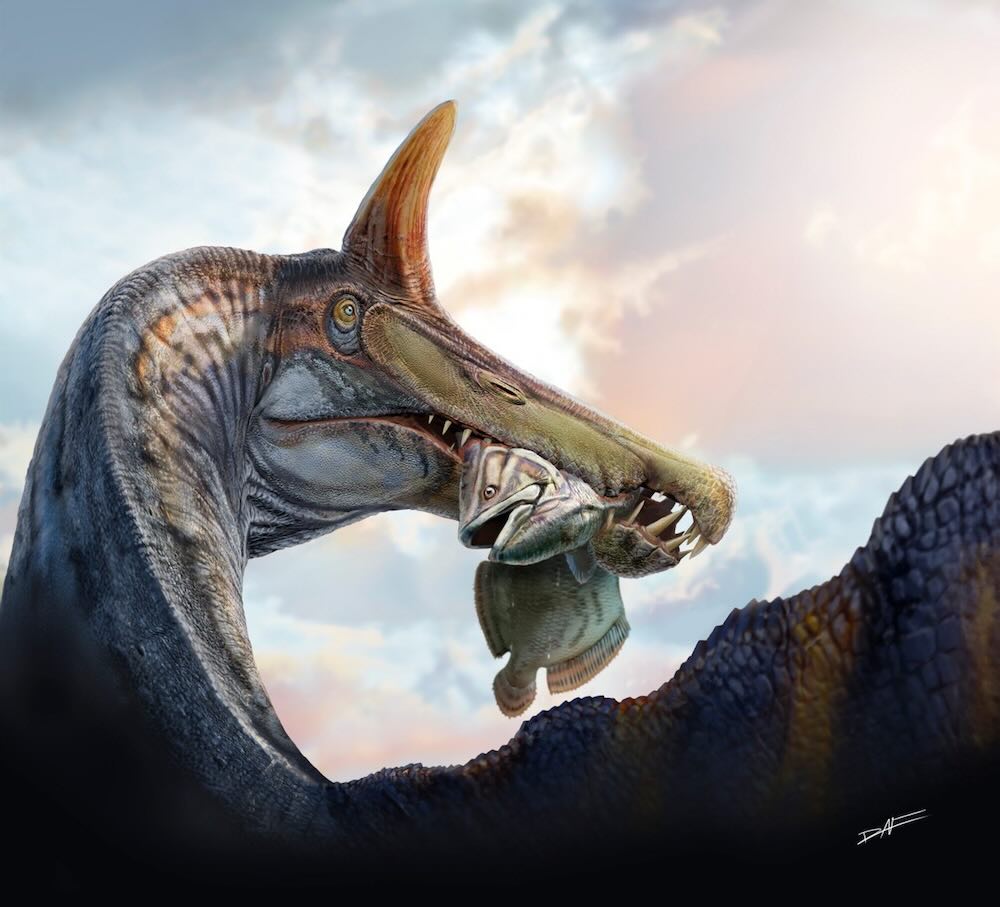
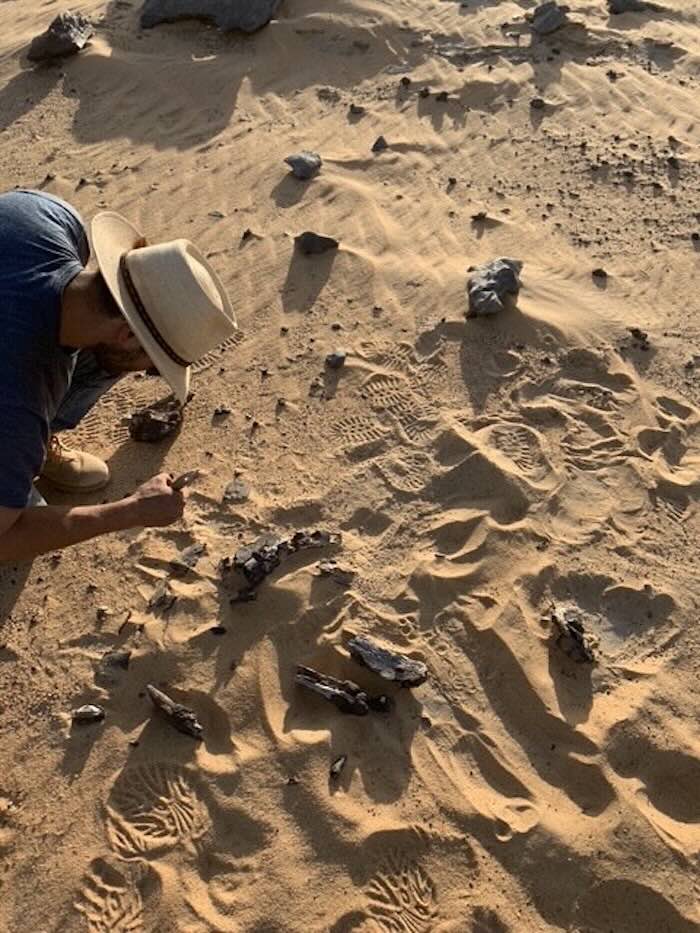
This remarkable dinosaur is similar in size and skeletal structure to its cousin, Spinosaurus aegyptiacus, but stands out due to its striking scimitar-shaped bony crest. Sereno shared that the crest’s size and unexpected nature caught the team off-guard when they initially discovered it along with some jaw fragments on the desert floor.
Upon returning with a larger research team, they unearthed two additional crests, further highlighting the uniqueness of this species. “This find was so sudden and amazing; it was truly an emotional experience for our team,” said Sereno, a professor at the University of Chicago, who led a 20-member team for this exploration.
The researchers speculate that the crest was vividly colored, rising elegantly like a blade-shaped beacon, and was likely covered in keratin. It may have served as a visual display rather than a tool for movement or hunting.
“I will always treasure the moment we gathered around a laptop in camp to view the new species for the first time. One of our team members created 3D digital models of the bones we discovered to help assemble the skull—all powered by solar energy in the heart of the Sahara. That was when the true significance of our discovery hit home,” Sereno reflected.
The findings, published in the journal Science, suggest that this could represent a ‘third phase’ in the evolution of these massive, fish-eating dinosaurs. Previously, spinosaurid remains had primarily been found in coastal deposits near shorelines, leading to speculation that these theropods may have been fully aquatic, hunting for prey underwater.
However, the new fossil site in Niger reveals that these dinosaurs thrived well inland, up to 620 miles from the nearest marine coastline. The research team noted that the dinosaur’s “striking” interdigitating upper and lower tooth rows formed a formidable trap for catching slippery fish.
“I envision this dinosaur as a kind of ‘hell heron’ that could easily wade into two meters of water on its sturdy legs, while likely spending much of its time stalking shallower waters for its next meal,” the researchers concluded. This discovery not only adds to our understanding of dinosaur diversity but also sparks the imagination about life in a long-lost world.