
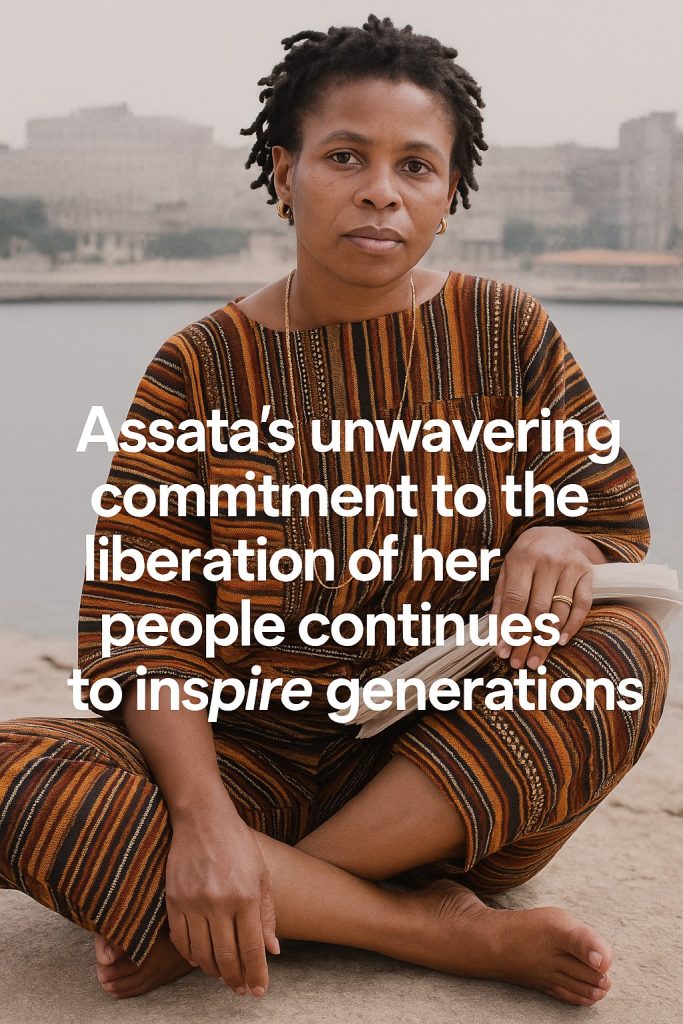
The people’s struggle for justice and liberation has often been defined by the voices that rise against oppression. One such voice is that of Assata Shakur, whose unwavering commitment to the liberation of her people continues to inspire generations. Recently, The People’s Forum, an influential platform within the social justice community, highlighted the lasting impact of Shakur’s activism on contemporary movements.
Born JoAnne Deborah Byron in 1947, Assata Shakur became a central figure in the Black Liberation Army during a time of profound civil unrest in the United States. In 1973, she was involved in a shootout with law enforcement that resulted in the death of a state trooper. Shakur was subsequently convicted of charges related to the incident, but her supporters maintain her innocence, asserting that the trial was rife with injustice.
Following her escape from prison in 1979, Shakur sought asylum in Cuba, where she penned her autobiography, Assata: An Autobiography. The book has become a seminal text in Black liberation literature, detailing her struggles against systemic racism, her experiences in prison, and her vision for a just world. Through her writings, Shakur has passionately articulated the need for collective action to dismantle oppressive systems, resonating deeply with activists today.
In recent weeks, Shakur has once again become a focal point in discussions about racial justice and liberation movements, as social media platforms erupt with quotes and reflections on her teachings. The People’s Forum emphasized that her commitment to liberation serves not only as a historical reference but also as a contemporary call to action. “Inspired by her resilience, new generations are mobilizing to fight against the same systemic injustices she addressed decades ago,” the forum stated in their post that quickly garnered thousands of likes and shares.
This resurgence of interest in Shakur’s life and work is particularly timely as the nation grapples with issues of systemic racism, police violence, and social injustice. Movements such as Black Lives Matter often draw parallels to the struggles Shakur faced, highlighting the ongoing fight for civil rights and equality. Activists frequently cite Shakur’s life as a blueprint for resilience and empowerment in the face of adversity.
Moreover, social media has played a crucial role in reshaping the narrative surrounding Shakur and her legacy. With platforms like Instagram and Twitter serving as tools for education and advocacy, younger activists are utilizing her story to mobilize support for various causes, from prison reform to anti-police brutality campaigns.
As conversations around Assata Shakur continue to circulate globally, it is clear that her message transcends time. Her words of courage and activism remind us that the fight for justice is far from over. As we reflect on her contributions and the impact she has made, we are urged to carry forward her legacy, taking inspiration in the ongoing quest for liberation and social justice.