
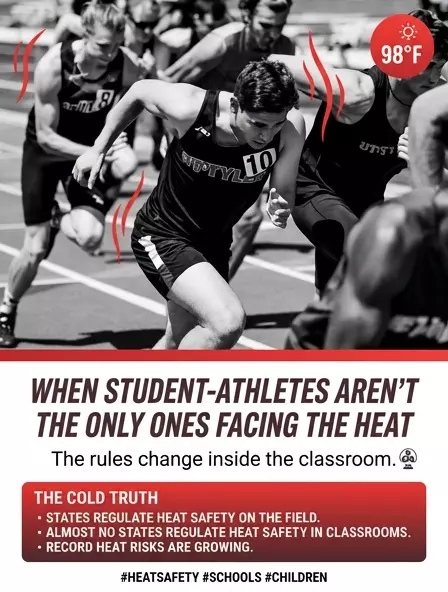
As summer waves goodbye and students gear up for a new school year, heartbreakingly high temperatures continue to scorch much of the United States. Record-breaking heat has overwhelming many regions, prompting urgent discussions about outdoor safety, especially for student athletes. While many states and athletic governing bodies have enacted measures to shield young athletes from the dangers of extreme heat, a notable gap remains when those children transition from the playing field to the classroom.
Across the nation, athletic organizations such as the National Federation of State High School Associations and numerous state health departments have established heat policies. These protocols include mandatory hydration, designated cooling zones, mandatory breaks during practice, and temperature thresholds for cancelling or postponing games and practices. Such measures are instrumental in preventing heat-related illnesses among young athletes, who are particularly vulnerable due to their developing bodies and higher metabolic rates during physical activity.
However, the concern intensifies once the whistle blows and athletes return to the classroom. Unlike their sports environments, most schools lack comprehensive heat safety standards designed to protect children during the school day. With many districts operating without specific guidelines on indoor and outdoor heat exposure, students can be left vulnerable to heat exhaustion, dehydration, and even heat stroke during seemingly routine activities, such as recess, physical education, or even prolonged classroom stays in poorly ventilated spaces.
The absence of these protections raises critical questions about school accountability and policy prioritization. Experts warn that children’s health is at significant risk, especially for students in lower-income districts or schools without adequate air conditioning. Data suggests that children are less efficient at regulating their body temperature compared to adults, making them more susceptible to heat-related health issues.
Advocates are calling for a unified approach that extends heat safety protocols beyond athletic fields and into the classroom. Recommendations include implementing temperature monitoring systems, ensuring proper ventilation, adjusting school schedules during heat waves, and mandatory educational programs about heat illness prevention.
Dr. Lisa Morgan, a pediatrician specializing in environmental health, emphasizes, “Heat does not discriminate—it affects all children. Schools need clear, enforceable policies that prioritize student safety during extreme weather conditions, both for outdoor activities and during indoor hours to prevent heat-related health crises.”
The ongoing heat wave underscores the urgency of public health action. As climate change continues to increase the frequency and severity of heat events, the need for comprehensive heat safety standards across all school settings becomes more critical than ever. Protecting our children from heat-related dangers isn’t just a matter of athletic safety; it’s a fundamental aspect of school health policy that demands immediate attention.
Where to Learn More
- CDC: Extreme Heat and Children’s Health – Centers for Disease Control and Prevention
- NFHS: Heat Acclimatization & Safety in High School Sports – National Federation of State High School Associations
- The Aspen Institute: Preventing Heat Stroke in Schools
- Heat Stroke in Children: Symptoms and Prevention – Healthline