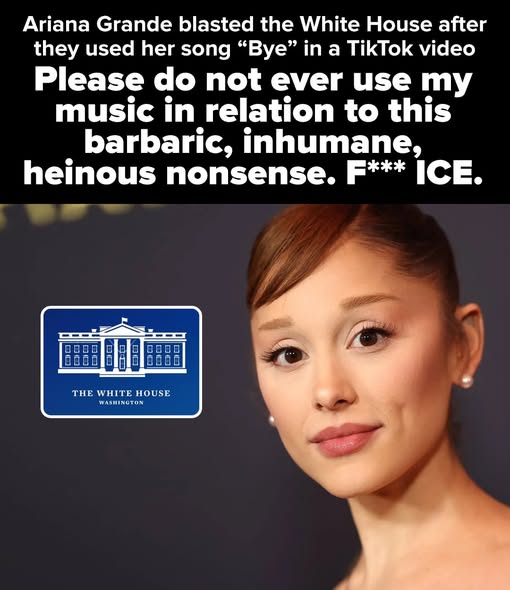
Music often serves as a unifying force, transcending boundaries and inspiring social change. However, it can also lead to controversy when misused or associated with unintended contexts. The latest example of this occurred when pop superstar Ariana Grande publicly expressed her outrage after discovering that her song “Bye” was used in a TikTok video produced by the White House without her consent.
On social media, Grande took to her platform to voice her displeasure. She shared a stark statement accompanied by an image that read: “Ariana Grande blasted the White House after they used her song ‘Bye’ in a TikTok video. Please do not ever use my music in relation to this barbaric, inhumane, heinous…”
The incident has ignited a wave of discussions across the internet, with fans and critics alike questioning the appropriateness of the White House’s decision to incorporate her music into a political and social messaging campaign. Critics argue that the song’s tone and lyrics do not align with the messaging portrayed in the TikTok video, which many are describing as controversial, especially given the political climate surrounding recent administrations.
Representatives for Ariana Grande clarified that she was not approached for permission to use her song and expressed her disappointment that her music was linked to a project she finds morally objectionable. Her statement underscores her stance against the association, highlighting her insistence that her artistic work should not be used to endorse or support views or actions she does not endorse.
Meanwhile, White House officials have yet to issue an official statement regarding the incident. The controversy raises broader questions about copyright, artists’ rights, and ethical considerations when government agencies utilize popular music in their campaigns. Critics argue that such uses should always involve proper licensing and artist consent, especially when the content may be used in a context the artist finds objectionable.
This situation also underscores the power of social media as a platform for artists and the public to hold institutions accountable. Grande’s direct and bold response exemplifies how artists are increasingly vocal about their boundaries and the importance of respecting creative ownership in political messaging.
As the conversation continues, fans and advocates are urging the White House to clarify their policies on music licensing and to respect artists’ wishes. Many are also calling for greater transparency in how government bodies select and approve music for official content, emphasizing that consent and appropriate context are essential.
Ultimately, this incident serves as a reminder of the ongoing debate about the ethical use of popular culture in politics and the need for respect for artists’ intellectual property and personal beliefs.