
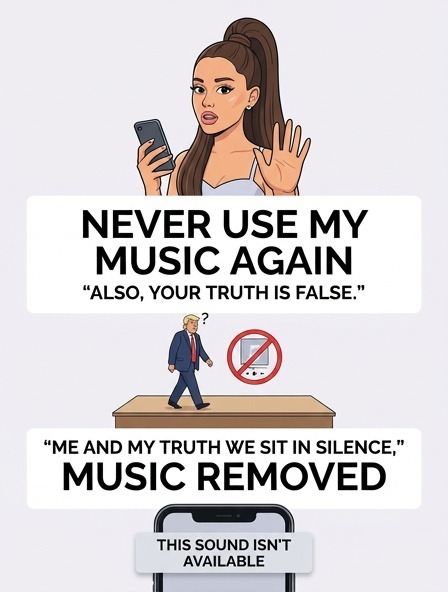
In a striking move that underscores the ongoing tensions between pop culture icons and political campaigns, Ariana Grande has successfully compelled Donald Trump’s team to remove her music from a recent promotional TikTok video. The incident unfolded on Thursday when Team Trump uploaded a clip featuring the former president walking onstage, set against the backdrop of Grande’s song “We Can’t Be Friends.”
The video opens with a line directly from the track: “Me and my truth we sit in silence.” This memorable lyric was used to bolster a political message: “Men can’t have babies and should never compete in women’s sports.” Critics quickly pointed out the stark contrast between the song’s context—a lament about the end of a relationship—and the campaign’s controversial stance on gender issues.
Within hours, Grande’s response was swift and unequivocal. She took to the comments section, writing, “Never use my music again. Also, your truth is false.” Her public rebuke was met with widespread attention, highlighting her disapproval of her work being co-opted for political messaging she opposes. Though her comment appears to have since been hidden or deleted, her objection did not go unnoticed.
Meanwhile, the original TikTok video remains online, but where Grande’s song once played, an automated message now reads, “This sound isn’t available.” The replacement indicates that the music rights holder—presumably Grande’s team—acted quickly to remove her song from the clip.
This is not the first time Grande has openly condemned the unauthorized use of her music by political figures. Her vocal stance underscores a broader effort by artists to maintain control over how their work is used—especially when it involves messages they personally find objectionable.
Fans and critics alike have praised Grande for standing firm. Her decisive action not only blocks her voice from being used in a context she opposes but also sends a clear message about the importance of artists’ rights and political boundaries. As social media continues to serve as an arena for political messaging, this incident highlights the ongoing debate over consent and control in digital content sharing.
While the TikTok clip persists in some form, Grande’s firm response exemplifies how celebrities are increasingly wielding their influence to shape their brand and moral stance in a polarized climate. This episode fuels the ongoing conversation about the limits of political campaigns’ use of popular music and the responsibility of artists to protect their work from being used inappropriately.
Where to Learn More
- Billboard: Ariana Grande Reclaims Her Music After Trump Campaign Uses It in Controversial TikTok
- The New York Times: Celebrities Push Back Against Political Manipulation of Music
- Reuters: Artists Fight Back as Politicians Use Their Music Without Permission
- The Hollywood Reporter: How Artists are Taking Control in the Age of Digital Political Campaigns