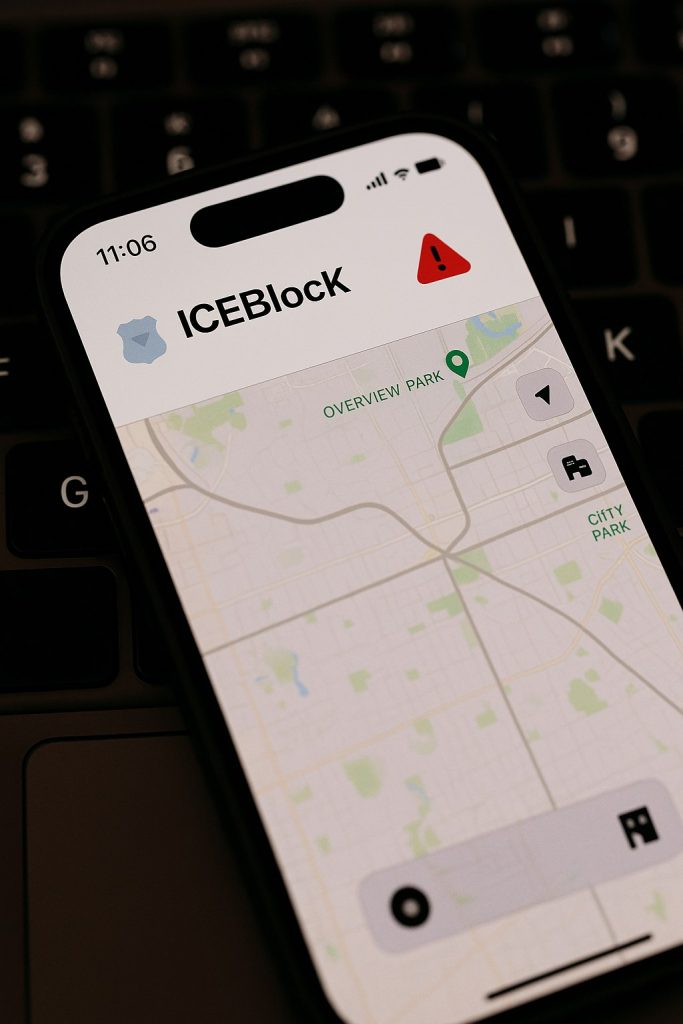
In a significant move that has sparked widespread backlash, Apple announced the removal of the popular ICEBlock app from its App Store. This application, which enabled users to track immigration enforcement operations in real-time, was taken down following mounting pressure from the U.S. Department of Justice (DOJ). The decision has ignited a fierce debate over government influence on technology platforms and the balance of privacy and civil rights.
The app, developed to empower communities by providing vital information regarding the presence of Immigration and Customs Enforcement (ICE) agents, gave users tools to enhance their awareness of immigration activities in their local areas. Its supporters argue that such tools are essential for transparency and public safety, especially within immigrant communities that often feel vulnerable to unexpected law enforcement actions.
“Capitulating to an authoritarian regime is never the right move,” said the developer of ICEBlock, who spoke out in a social media post shortly after the app’s removal. This sentiment resonated with many users who viewed the app as a tool for resistance against systemic oppression. The developer criticized Apple’s compliance with federal pressure, highlighting concerns that the decision essentially diminishes the rights of citizens to monitor local law enforcement actions.
The backlash has led to spirited discussions on platforms such as Twitter and Facebook, where users have expressed their outrage using the hashtag #BoycottApple. Critics argue that by siding with the DOJ, Apple is undermining freedoms inherent in democratic societies. Many have called for alternative platforms that prioritize user autonomy and civil liberties over government demands.
Throughout the app’s lifespan, ICEBlock played an instrumental role in alerting users to immigration operations, often in neighborhoods with significant immigrant populations. The app’s absence is raising alarms among advocates who assert that without such resources, communities may be left in the dark regarding federal actions that affect their lives.
Experts anticipate that Apple’s decision may prompt other tech companies to reevaluate their stances on controversial government requests. “This sets a concerning precedent,” said technology and civil rights advocate José Martín. “If companies like Apple can be pressured into removing applications that serve the public interest, what does that mean for user rights?”
As the fallout of this decision continues to unfold, advocates from various organizations, including the ACLU and immigrant rights groups, are planning future demonstrations and online campaigns to push back against what they label as “corporate censorship.” The consequences of Apple’s removal of ICEBlock extend beyond the app itself, touching on broader issues of freedom, government surveillance, and corporate responsibility in the digital age.
With public sentiment running high, it remains to be seen how Apple will respond to ongoing criticism. As debate swirls around the implications of this decision, many are left questioning whether tech companies should be free to operate independently of government influence—especially when the rights of ordinary citizens are at stake.