Exciting new research reveals that apes share an extraordinary ability to imagine and engage in pretend play, a trait once thought to be exclusive to humans. This groundbreaking study, conducted by scientists at Johns Hopkins University in Baltimore, Maryland, showcases a series of delightful tea party experiments that have transformed our understanding of animal cognition.
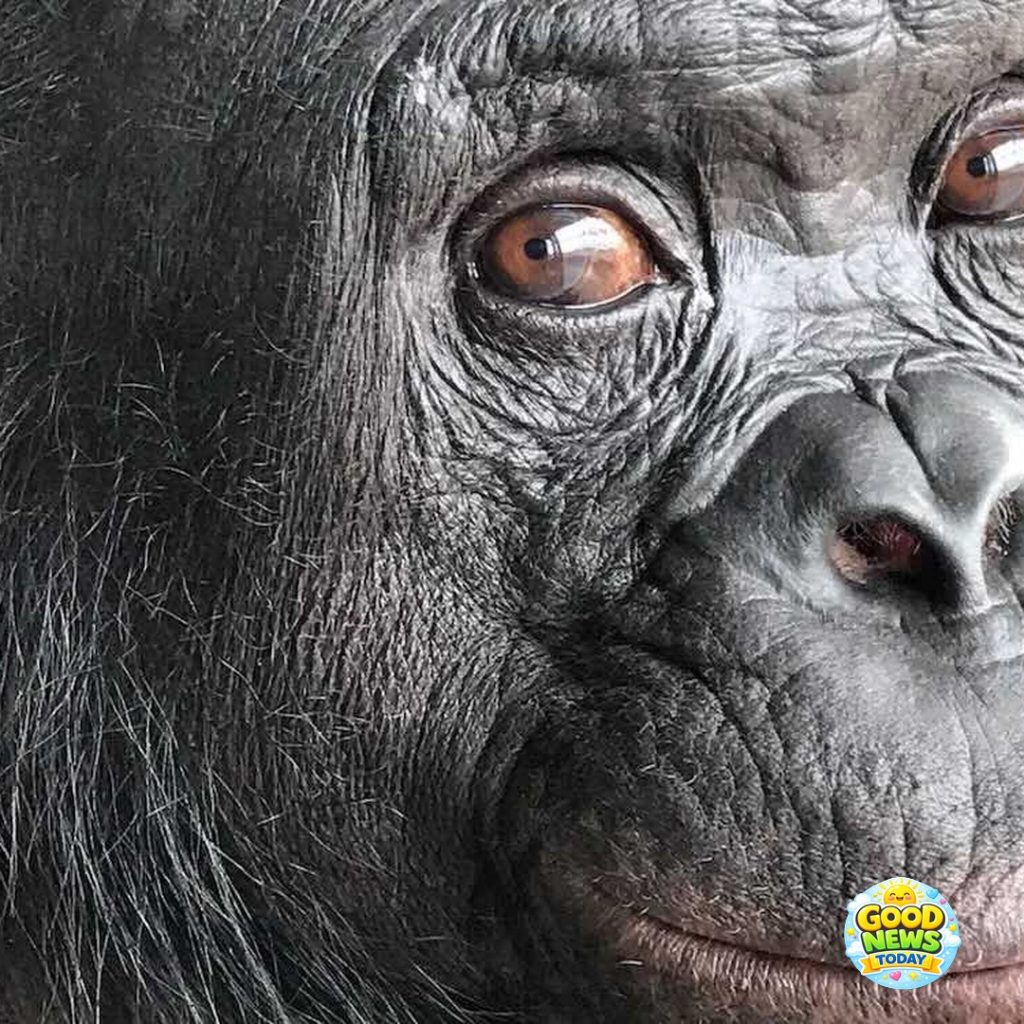
The research indicates that apes possess the capacity for imagination, as demonstrated by a bonobo named Kanzi, who interacted with empty cups and bowls as if they contained imaginary juice and grapes. This behavior was observed consistently across three experiments, challenging previous beliefs about animal capabilities.
Published in the journal Science, the findings suggest that at least some apes, particularly those raised in human environments, have a cognitive potential that allows them to comprehend pretend objects. This remarkable ability may date back six to nine million years to our shared evolutionary ancestors.

Dr. Christopher Krupenye, a co-author of the study, expressed the significance of these findings, stating, “It is truly revolutionary to realize that their mental lives extend beyond the present moment.” He highlighted that while imagination has been viewed as a defining human trait, this research invites us to rethink what makes us unique and to explore the mental lives of other species.
Just as Jane Goodall’s discovery of tool-making in chimpanzees reshaped our understanding of what it means to be human, this new insight into ape imagination encourages us to reconsider the boundaries of animal cognition.
Human children typically begin engaging in pretend play by the age of two, such as hosting tea parties, and even infants as young as 15 months exhibit surprise when witnessing pretend actions. Despite several observations of playful behaviors in animals, there has been a lack of formal studies on pretending among non-human species.
For example, young female chimpanzees are often seen playing with sticks as if they were infants, and a captive chimp once appeared to drag imaginary blocks after playing with real ones. Inspired by these observations, Dr. Krupenye and co-author Amalia Bastos, who is now a lecturer at the University of St. Andrews in Scotland, sought to investigate pretend play in a controlled environment.
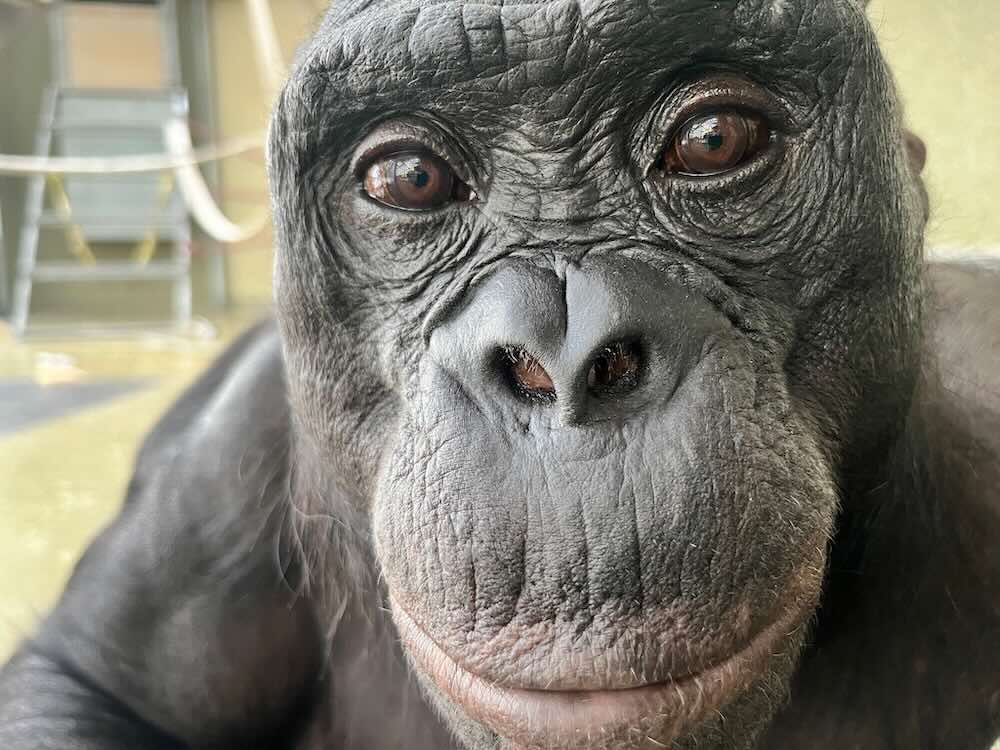
The duo devised experiments reminiscent of a child’s tea party, focusing on Kanzi, a 43-year-old bonobo residing at the Ape Initiative in Iowa, a research center dedicated to the study and conservation of bonobos. Kanzi had previously shown signs of engaging in pretense and could respond to verbal cues by pointing.
During the experiments, Kanzi and a researcher sat across a table from each other, mimicking a tea party setup. In the first task, two transparent cups and an empty pitcher were placed on the table. The researcher pretended to pour imaginary juice into the cups and then acted as if they were dumping the juice out of one, all while observing Kanzi’s reactions.
These remarkable findings not only shed light on the cognitive abilities of apes but also encourage us to appreciate the rich mental lives of animals. As we continue to explore the depths of animal intelligence, the connection between humans and our primate relatives becomes even more profound and enchanting.