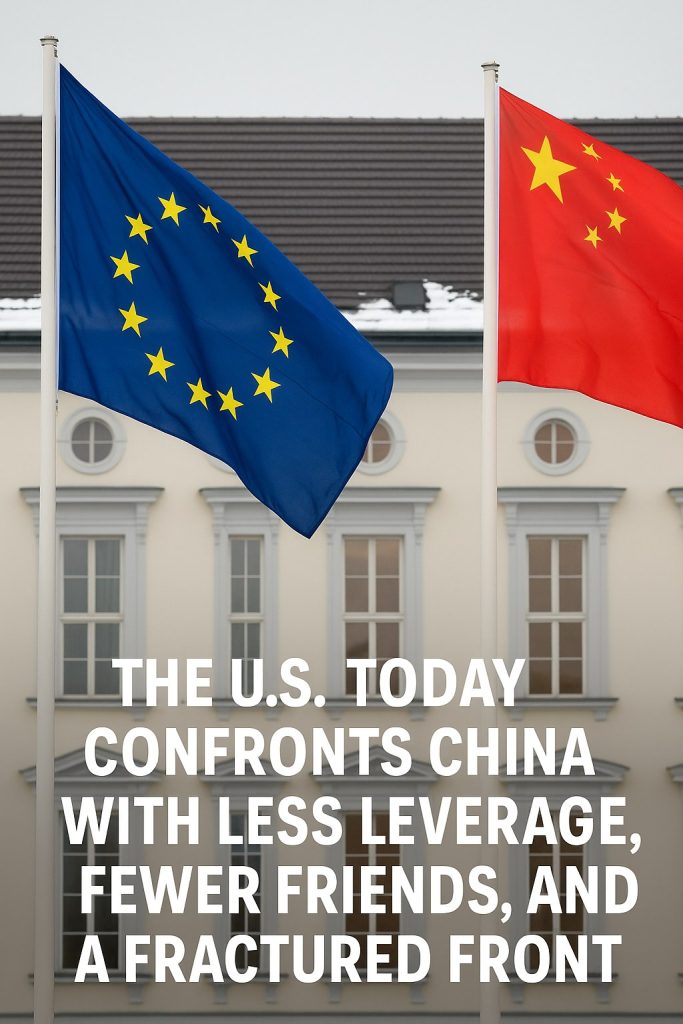
As diplomatic tensions rise, many analysts argue that the United States is navigating a precarious landscape in its relationship with China. Recent discussions on social media highlight a growing concern: the U.S. is approaching this crucial geopolitical rivalry with diminished leverage, fewer allies, and a disjointed approach that could ultimately weaken its global standing.
Less Leverage
Gone are the days when the U.S. could command a united front against Beijing, buoyed by strong alliances and economic might. According to the latest assessments, America’s position has significantly eroded, leaving it unable to effectively counter China’s assertive policies in Asia and beyond. With the U.S. grappling with internal divisions, many believe that the American power narrative is faltering amidst China’s growing influence.
Fractured Alliances
In recent years, alliances that once stood firm from the Pacific to the Atlantic have shown signs of strain. Countries that once aligned closely with U.S. interests are now exploring paths towards accommodating China’s ambitions. For instance, nations in Southeast Asia have increasingly found themselves in a delicate balancing act, often hesitant to confront Beijing over issues such as the South China Sea dispute.
Talk of “putting America First” once reverberated throughout political discourse; however, many experts argue that it has translated into increased isolation rather than prosperity. In the wake of rising economic nationalism, allies have expressed concerns over U.S. foreign policy’s predictability, leading to skepticism about America’s reliability as a partner.
Economic Consequences
The economic ramifications of this evolving dynamic cannot be ignored. With increasing economic pressure from China, U.S. businesses are feeling the pinch. Many multinational corporations have had to recalibrate their business strategies, often sacrificing competitive advantages to appease or gain favor with the Chinese market. As chance meetings between national leaders grow increasingly fraught, multinational enterprises may find themselves caught in the crossfire of geopolitical tensions.
Furthermore, as nations are pressured to choose sides in the U.S.-China rivalry, economic cooperation may be jeopardized, leading to a fragmentation of the global economy that could leave America weaker and poorer in the long run.
A Call to Action
The U.S. has an urgent need to reassess its diplomatic strategies in an ever-evolving world order. Strengthening alliances and fostering collaborative ties with traditional partners, and even rivals, could be essential. Rebuilding trust and affirming commitments to mutual defense and prosperity can help mitigate the perception of U.S. isolationism.
The dialogues on social media echo a broader call for that reevaluation. As America attempts to counterbalance China’s influence, fostering unity among allies and focusing on collective economic strategies may well be the keys to a resilient American presence on the global stage.
Where to Learn More
- The High Stakes of U.S.-China Relations – CNBC
- The Fractured U.S. Front Against China – Foreign Policy
- America’s Vanishing Leverage in Global Governance – Brookings Institution
- America’s Economic Dilemma: Navigating Trade with China – The Atlantic