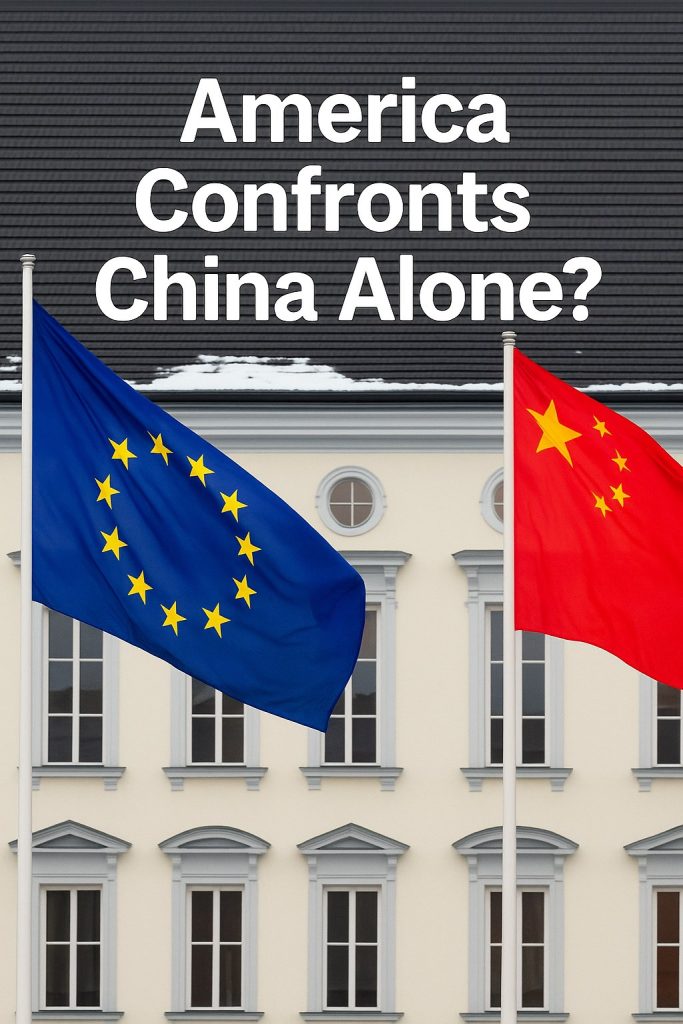
As tensions escalate between the United States and China, many political analysts argue that a seismic shift has occurred in global power dynamics. The U.S. finds itself confronting a resurgent China from a position of diminished leverage, fewer international allies, and what critics call a fractured front. This reality stands in stark contrast to the “America First” rhetoric prevalent in recent political discourse, prompting questions about the implications for the nation’s standing on the world stage.
Historically, the U.S. has maintained a network of alliances that have bolstered its foreign policy and defense strategies. However, recent developments, including trade disputes and military posturing in the South China Sea, have strained these relationships. Experts suggest that these tensions have left the U.S. with fewer friends as countries weigh their own interests against the growing influence of China.
“We are at a crossroads,” says Dr. Ellen Wang, a renowned geopolitical analyst. “The strategies employed in the past have not only faltered but have also reduced our ability to rally allies around common interests. This is not a recipe for a stronger America.” Indeed, nations that once stood shoulder-to-shoulder with the U.S. in confronting China now find themselves walking a tightrope, balancing their economic ties with Beijing against a desire for American support.
The economic repercussions of this shifting landscape are significant, with many fearing that the U.S. is headed toward increased isolationism. “It’s a lose-lose situation,” Drake Thompson, an economist, asserts. “Less cooperation with our allies means less economic leverage, which could result in larger trade deficits and ultimately a hit to American consumers.” In an era where global interdependence is the norm, failing to engage with allies could lead to long-term socioeconomic repercussions that impact both local and national economies.
Critics point to the deteriorating relationship as a dangerous precedent. Former Secretary of State John Kerry remarked, “Climate change and global challenges don’t recognize borders. Our isolation will only exacerbate these issues.” As countries grapple with pressing concerns like environmental degradation and health crises, an America that retreats from global engagement sets a troubling tone for international cooperation.
Despite the signs of vulnerability, U.S. officials maintain a hardline stance against China’s aggressive policies, particularly regarding Taiwan. However, this approach raises further questions about the sustainability of American influence in the region. “The way forward must involve rebuilding relationships and earning trust in our alliances,” stresses Dr. David Chen, a foreign policy expert. “Otherwise, we may find ourselves cornered in a new geopolitical reality.”
As the Biden administration looks to navigate these complex waters, the impact of U.S. actions over the coming months will be crucial. Whether policymakers will pivot towards a more collaborative approach—or continue down a path of isolation—remains to be seen. One thing is clear: the stakes have never been higher, and the ramifications of America’s current strategy may echo for generations.
Where to Learn More
- The U.S.-China Relations Crisis: Analyzing the Stakes – Foreign Affairs
- U.S. Allies and Climate Change: Struggling in the Shadow of China – Brookings Institution
- The Future of U.S.-China Alliances: What 2024 Holds – CNN