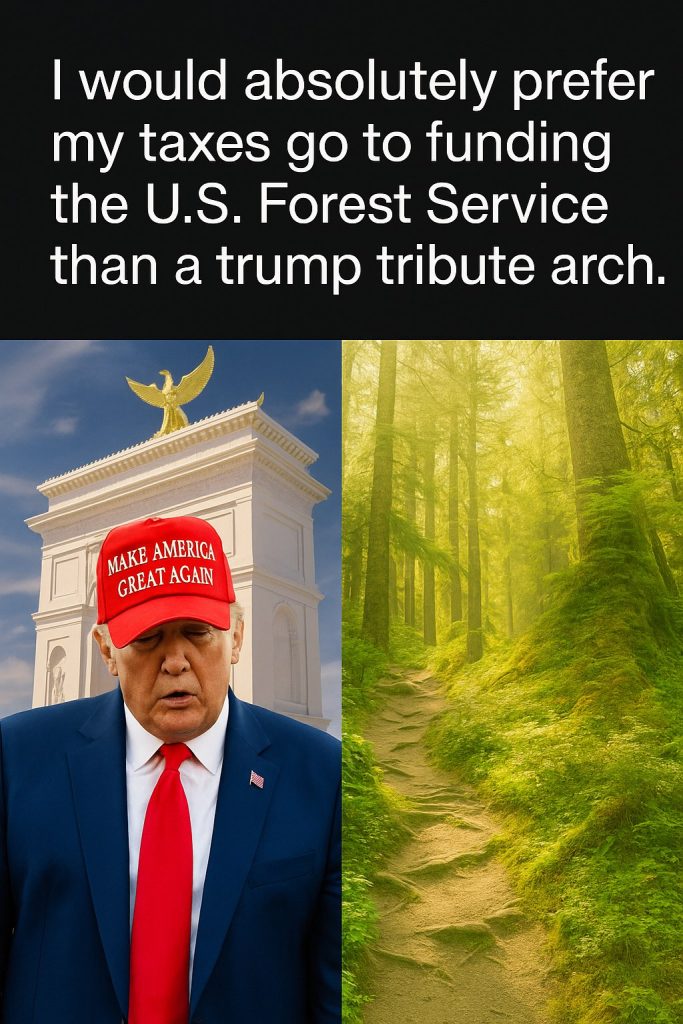
A recent viral social media post ignited a passionate discussion about government spending priorities, with a focus on whether tax dollars should support environmental programs like the U.S. Forest Service or symbolic projects such as a proposed Donald Trump tribute arch.
The post, which originated with the username “drimplants,” featured a simple but pointed message: “I would absolutely prefer my taxes go to funding the U.S. Forest Service than a Trump tribute arch.” This statement struck a chord with many Americans concerned about fiscal responsibility and environmental conservation, while others defended the notion of commemorative monuments as a reflection of cultural heritage.
At the heart of this debate lies a broader dialogue about how the U.S. government allocates taxpayer funds. The U.S. Forest Service, managing 193 million acres of public land, plays a crucial role in protecting forests, maintaining wildlife habitats, preventing wildfires, and providing recreational opportunities. Many citizens argue that funding this agency yields tangible, practical benefits for both current and future generations.
Conversely, proposals for tribute arches or monuments dedicated to former President Donald Trump have surfaced in various localities, sparking controversy over their necessity and cost. Proponents say such monuments celebrate historical figures and contribute to tourism and local pride. Critics, however, view these as often politically motivated projects that divert funds from essential services.
Social media commentary around this topic reveals a significant divide. Supporters of environmental funding emphasize urgent issues like climate change, increasing wildfire severity, and public health impacts related to deforestation. They often highlight that the Forest Service’s budget is stretched thin and that additional resources could strengthen wildfire prevention and forest management.
Meanwhile, supporters of the tribute arch argue that honoring political leaders through monuments is a longstanding tradition and that such symbols can unify communities that feel politically underrepresented.
This discussion also touches upon how citizens perceive the role of government spending. Many feel that taxes should prioritize direct services and infrastructure, rather than symbolic structures with limited public utility.
Experts on public budgeting and political science suggest that balancing symbolic projects and essential service funding is a complex task that involves public input and transparent decision-making.
As public debate continues, one thing remains clear: Americans are passionate about where their tax dollars are spent, reflecting diverse values and priorities. Whether the future will see more investment in forest conservation or commemorative architecture remains to be seen, but the conversation has certainly brought attention to the importance of informed and engaged civic participation.
Where to Learn More
- About the U.S. Forest Service – U.S. Forest Service
- Why Memorials Matter – NPR
- Federal Spending on Environment & Natural Resources – Center on Budget and Policy Priorities
- Public Opinion on Government Spending and Priorities – Pew Research Center