The largest wildlife rescue organization in India has embraced acupuncture as a means to assist elephants in overcoming chronic pain, nerve damage, and mobility challenges stemming from their past experiences of captivity or laborious work.
The dedicated veterinary team sought training in alternative medicine to complement traditional veterinary practices, discovering that these techniques significantly enhanced recovery rates when conventional treatments fell short.
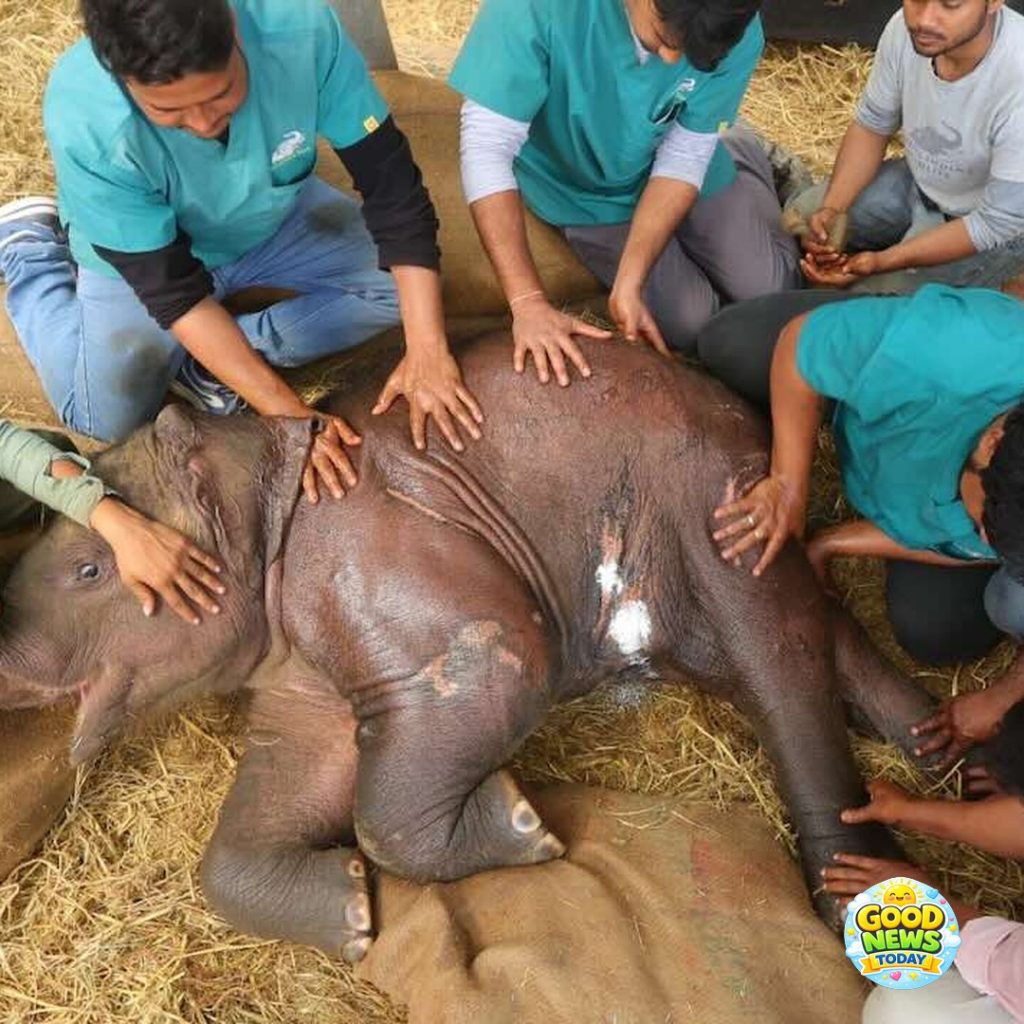
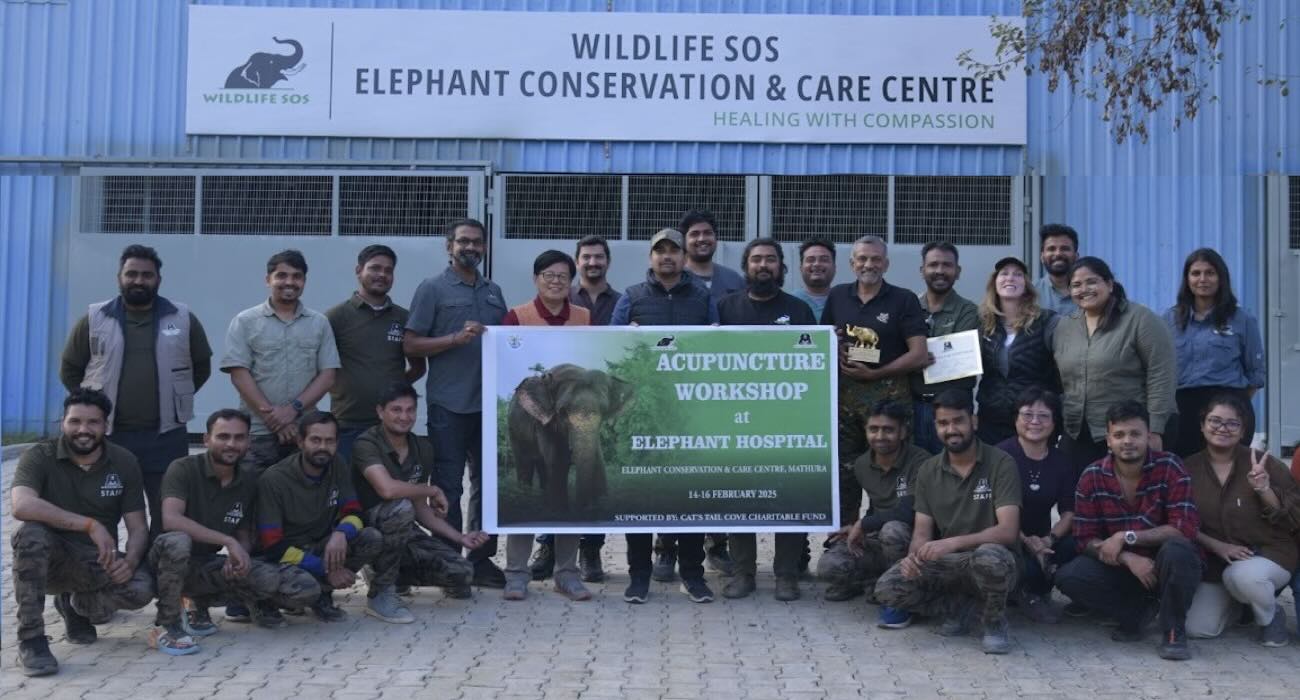
Established 30 years ago, Wildlife SOS currently operates 12 rescue and rehabilitation centers throughout India, including the Elephant Conservation and Care Centre in Mathura. It was here that veterinarians first encountered the potential of acupuncture while searching for solutions to help Bani, an orphaned calf who became paralyzed due to a tragic incident.
With a heartfelt commitment to help Bani regain her ability to walk, the team explored various healing methods ranging from ayurvedic oil massages to hydrotherapy. Their quest eventually took them to Thailand, where they discovered the ancient practice of acupuncture.
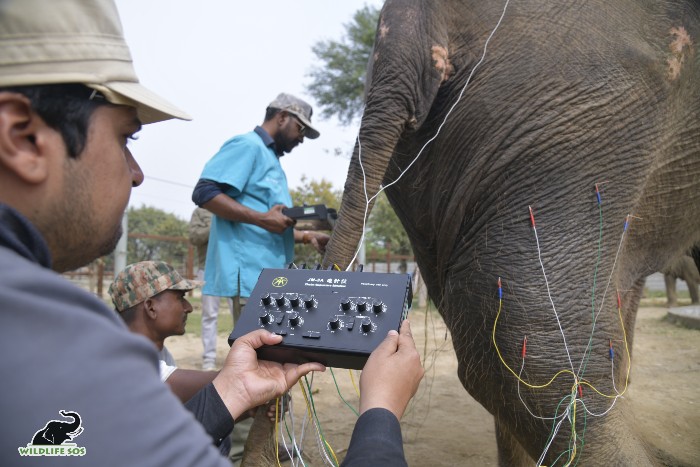
In Thailand, they met Dr. Porrakote Rungsri, a Veterinary Acupuncture Specialist from Chiang Mai University, and Dr. Huisheng Xie, the Founder of the Chi University of Traditional Chinese Medicine in the USA. Under their expert guidance, Bani’s veterinarians learned the fundamentals of acupuncture and how to adapt this time-honored technique to address various ailments in the elephants at their care center.
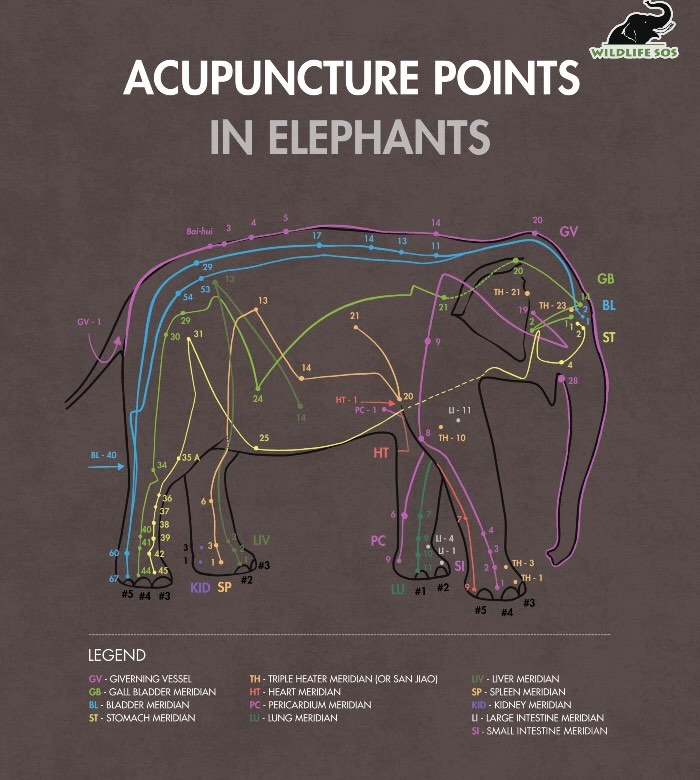
Acupuncture, with its origins dating back 2,000 years, aims to unblock the flow of energy through the body’s meridians, or energy channels. Although the idea of invisible energy might seem abstract to some, the practical application of needles along these pathways has demonstrated tangible benefits in both veterinary and human medicine. By stimulating specific points on the body, acupuncture can enhance circulation, alleviate pain, restore nerve function, and support natural healing processes.
When the body suffers an injury, damaged cells release chemicals like prostaglandins, bradykinin, and substance P, which signal the nervous system. These substances activate nociceptors, specialized nerve sensors that transform the chemical signals into electrical impulses. The pain message travels along nerve fibers, and once it reaches the spinal cord, neurotransmitters in the brain interpret this signal, making pain an experience that encompasses both physical and emotional dimensions.
“Many elephants rescued by Wildlife SOS experience overstimulated pain pathways due to years of abuse, inadequate nutrition, and untreated injuries, making chronic pain a significant hurdle to overcome,” explains Natasha Ashok from the organization.
“After our team acquired expertise in acupuncture principles, we began implementing it at our Elephant Hospital Campus, resulting in remarkable progress for several elephants.”
She notes that acupuncture has been effective in relieving pain, addressing digestive issues like colic and constipation, and reducing inflammation among the elephants in their care.
The journey to healing for these magnificent creatures continues to inspire hope and showcases the power of combining traditional and alternative medicine for the betterment of their well-being.