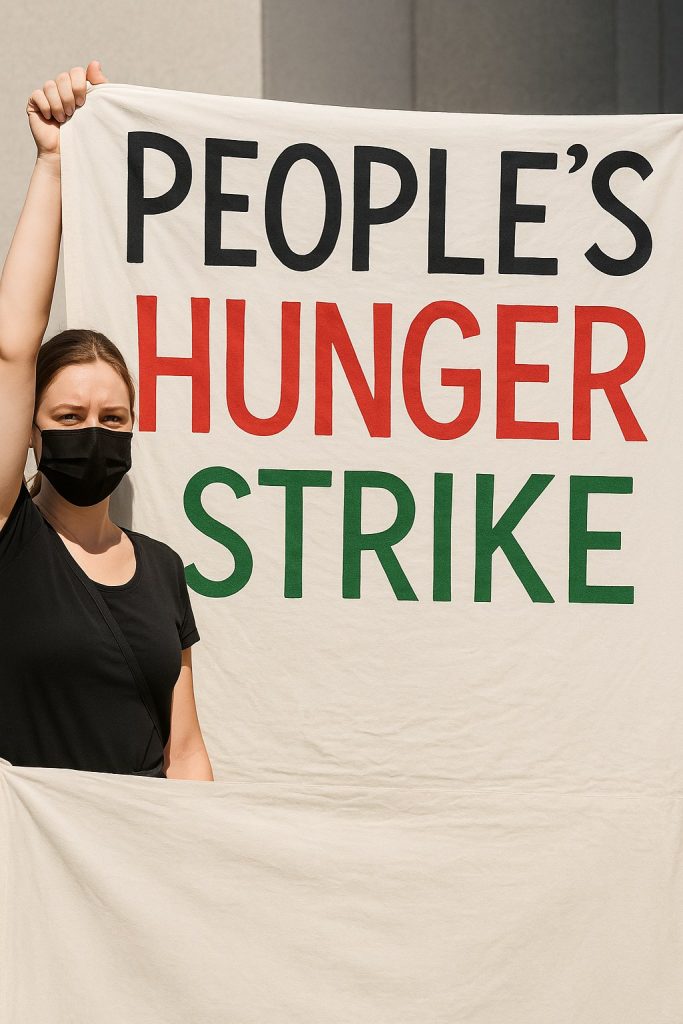
On September 4, the People’s Hunger Strike for Gaza (PHS) kicked off a month-long initiative aimed at drawing attention to the humanitarian crisis in Gaza and advocating for a reevaluation of U.S. aid to Israel. The launch event took place outside the iconic John F. Kennedy Federal Building in downtown Boston, where nearly fifty activists gathered, each committing to fast for at least a week to amplify their message.
The organizers of the hunger strike aim to apply pressure on elected officials, urging them to reconsider the military aid provided to Israel amidst ongoing conflict and what they describe as acts of genocide and bombardment in Gaza. Holding signs with slogans such as “Stop the Bombing” and “End U.S. Aid to Israel,” participants expressed solidarity with the Palestinian people and highlighted the severe humanitarian consequences of the current conflict.
“This fast is not just a personal commitment; it’s an act of resistance,” said Areen Abusada, one of the organizers and a local activist. “We believe that withholding aid is essential to stop the violence and suffering in Gaza. Our hunger strike symbolizes both sacrifice and a call to action.”
The event sparked varied reactions among onlookers, with some expressing support while others voiced their opposition. Activists engaged passersby in discussions about the dire situation in Gaza, urging them to be informed and take action. “People are suffering, and we cannot turn a blind eye. We must stand up for justice and humanity,” said another participant, Sarah Khalil.
The PHS campaign is structured to include staggered fasting periods, with participants committing to a range of weeks and days to amplify public consciousness over the entire month. Each individual will share their experiences and motivations through social media and local outreach efforts, aiming to build a broader coalition of supporters throughout Boston and beyond.
The Gaza Strip has witnessed a dramatic escalation in violence recently, prompting international outcry and debates about the implications of U.S. foreign policy in the region. As such, the hunger strike is attempting not only to raise awareness but also to engage citizens in a wider dialogue around accountability and human rights.
Despite differing opinions on the Israel-Palestine conflict, organizers maintain that their message is about humanitarian aid, human rights, and the cessation of violence against civilians. “This isn’t just a political issue; it’s a human issue. We are all interconnected, and we must take a stand for those who are suffering,” Abusada emphasized.
The month-long hunger strike illustrates a growing trend among grassroots movements leveraging fasting as a form of protest to exert moral pressure on governments and institutions. Activists hope their courageous stand will inspire others to join in solidarity, creating a collective voice that cannot be ignored.
As the campaign progresses, PHS plans to host various events, including educational workshops on Gaza’s situation, guest speakers, and discussions on alternatives to current U.S. policy. The ultimately goal is not only to fast but to foster an informed and engaged community ready to advocate for change.