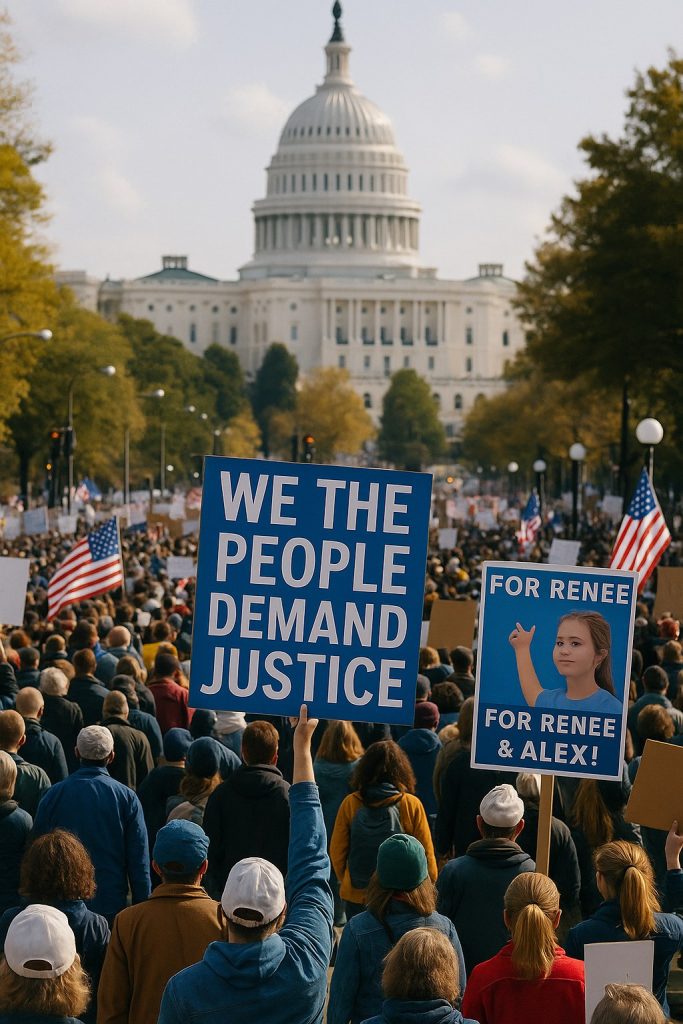
The largest demonstration yet in the No Kings protest series swept across all 50 states this weekend, marking a pivotal moment in a movement designed to challenge rising authoritarianism and call for renewed democratic accountability.
With an astonishing tally of over 3,300 coordinated events, the protests ranged from the dense urban landscape of New York City—with its population of 8.5 million—to the small mountain town of Driggs, Idaho, home to fewer than 2,000 residents, a state where former President Trump won by 66%. The scale alone underscores the movement’s unprecedented reach.
Nearly half of these protests erupted in traditional Republican strongholds, shattering assumptions about political geography and activism. Texas, Florida, and Ohio each hosted more than 100 protests, while less populous states such as Idaho, Wyoming, and Utah tallied double-digit events. Speaking with reporters on-site, protesters expressed a determination to stand firm even where political affiliations might not seem favorable to their cause.
The movement’s emotional flagship rally took place at the Minnesota State Capitol, the very state that became the catalyst for this nationwide outcry following the deaths of two American citizens at the hands of ICE agents. Legendary rock icon Bruce Springsteen lent his star power, performing his newly released single that poignantly addresses the incidents, and urging the crowd, “Your strength and your commitment told us that this was still America. And this reactionary nightmare, and these invasions of American cities, will not stand.”
Further amplifying the event’s visibility, actor Robert De Niro energized the crowd in New York City by proclaiming, “It’s time to say no to kings. It’s time to say no to Donald Trump.” His remarks encapsulated the protest’s core message, striking a chord with thousands who gathered to demand an end to what they perceive as dangerous authoritarianism creeping into American political life.
In the nation’s capital, hundreds marched past the Lincoln Memorial holding signs emblazoned with slogans like “Put down the crown, clown” and “Regime change begins at home.” Providence alone witnessed 20,000 protesters flooding streets, while over 160 separate events popped up across Massachusetts. In Philadelphia, activists succeeded in temporarily shutting down roadways, and Chicago’s Grant Park was packed to capacity with passionate demonstrators.
The wave wasn’t confined to the United States. Thousands took to the streets in Rome and Paris, while protests emerged across more than a dozen countries worldwide, signaling global solidarity with the democratic ideals propelling the No Kings movement.
One Minneapolis protester summed up the sentiment simply: “Democracy is under threat.” Another, holding a sign that read “So bad, even introverts are here,” highlighted the widespread urgency felt across diverse communities.
Despite the sweeping turnout, the White House dismissed the movement as the product of “leftist funding networks” lacking widespread public support. Yet millions across continents tell a different story—one of growing concern, commitment, and courage in the face of deepening political turmoil.
This movement took root last summer and steadily gained momentum through the fall. Yesterday’s unprecedented turnout proves it is not dissipating. From red towns to blue cities, from rural Montana to remote Alaskan communities, this is no longer a coastal elite phenomenon. No Kings is now a nationwide—and globally recognized—clarion call.
Where to Learn More
- Massive Nationwide ‘No Kings’ Protest Unites Across Political Divides – NPR
- Bruce Springsteen Headlines No Kings Rally in Minnesota – The New York Times
- The No Kings Movement: Origins, Goals, and Impact – The Washington Post
- Global Pro-Democracy Protests Echo US’s No Kings Movement – BBC News