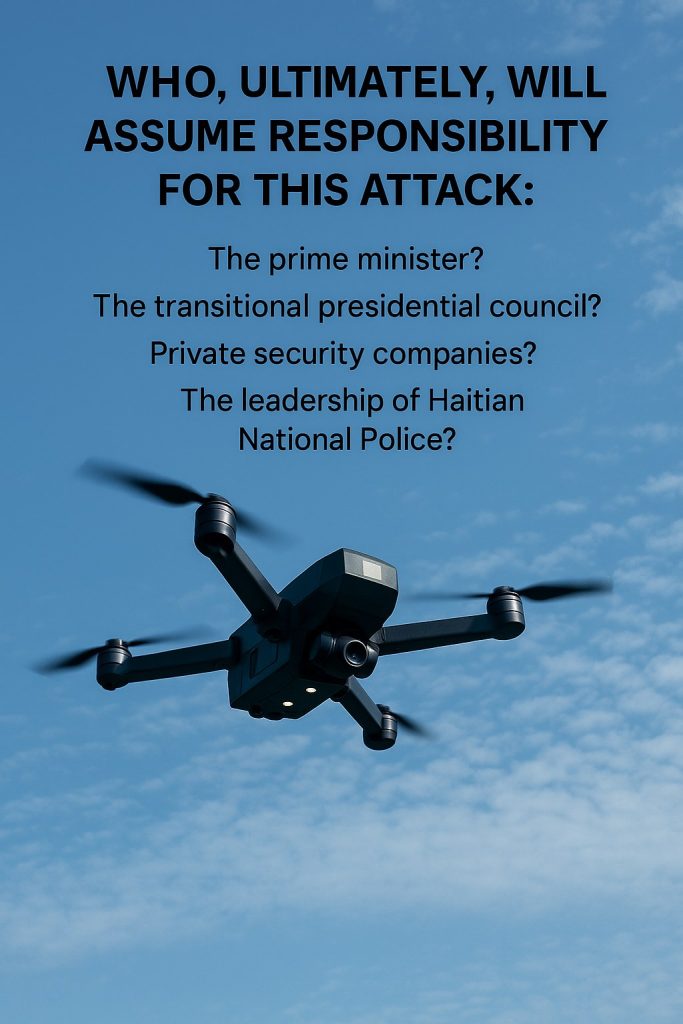
In recent days, shocking violent incidents in Haiti have raised urgent questions about accountability and governance in a nation grappling with political instability and rampant crime. An advocate’s poignant question resonates across social media platforms: “Who, ultimately, will assume responsibility for this attack: The prime minister? The transitional presidential council? Private security companies? The leadership of Haitian National Police?”
The context is sobering. In a nation scarred by logistical failures and a lack of robust law enforcement, recent attacks have left communities deeply shaken. Many Haitians are demanding answers about who is accountable for ensuring safety and order. On the streets, as well as online, the conversation has become a rallying cry for greater transparency and responsibility among the nation’s leaders and institutions.
The prime minister, Ariel Henry, has faced significant criticism since taking power in July 2021 following the assassination of his predecessor, Jovenel Moïse. Advocates assert that his administration must be held accountable for failing to control escalating violence and mafia-like gangs, which have caused widespread turmoil, insecurity, and even displacement among vulnerable populations.
As violence spikes, the role and effectiveness of the transitional presidential council, which includes multiple factions from the diverse Haitian political landscape, have come under scrutiny. Critics argue that factions are prioritizing political maneuvering over concrete action to stabilize the nation. “The transitional council must step up and clarify its plan to combat this violence, or it risks losing the trust of the people,” commented one political analyst.
Another layer of complexity is added by private security companies that have proliferated in Haiti. Many citizens dispute the effectiveness of these entities, questioning their motives and responsibility for ensuring public safety. “Private security cannot replace the national police,” said a community leader who prefers to remain anonymous. “We need systemic reform, not band-aid solutions.”
The Haitian National Police (HNP) has also been a focal point in discussions surrounding security. With limited resources and personnel, it frequently appears overwhelmed by the growing violence. “The leadership of the HNP must re-evaluate its strategies,” an ex-police officer stated. “The people deserve accountability from those who are sworn to protect them.”
The broader implications of these discussions touch upon the ongoing humanitarian crisis in Haiti, where consistent political instability has made it one of the poorest countries in the Western Hemisphere. Questions around governance not only influence the lives of everyday citizens but also have international ramifications, affecting aid and investments in the region.
As citizens take to social media platforms to express their anguish and frustration, the potential for a collective movement toward accountability grows. Calls for better governance, transparency, and systemic reform are gaining momentum. Citizens yearn for a restructuring of power dynamics that could lead to safety and peace in Haiti.
As conversations regarding responsibility continue, it remains critical for local leaders and international partners to collaboratively work toward sustainable solutions to Haiti’s multifaceted challenges. Only through accountability and concerted effort can Haiti hope to emerge from this state of crisis and rebuild its future.
Where to Learn More
- Haiti’s Governance Crisis: A Deep Dive – The Atlantic
- Whose Responsibility Is It? Understanding Haiti’s Surge in Violence – The Washington Post
- Haiti at the Crossroads: Violence and Accountability – Human Rights Watch
- Haiti’s Governance and Security Challenges: An Overview – BBC News