
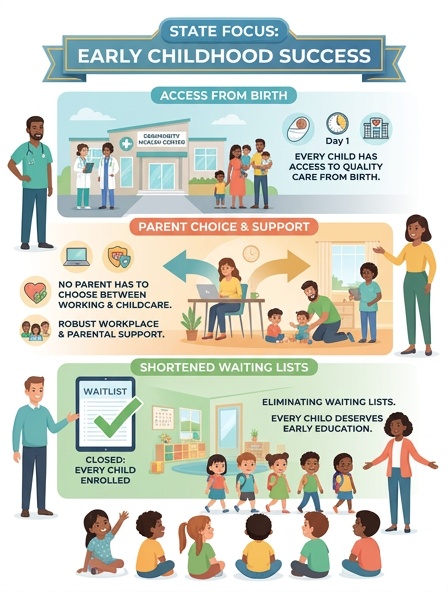
Imagine a state where every child, from the moment they are born, has access to quality care — no waiting lists, no hurdles, and no cause for parents to choose between working and staying home. This vision, once considered a distant ideal, is rapidly becoming a rallying cry among advocates pushing for comprehensive early childhood support systems across the country.
In this ideal future, seasonal shortages of childcare slots are replaced by plentiful, accessible services that support both families and economic growth. Parents can confidently return to work knowing their children are in safe, nurturing environments that foster early development. Young children benefit from early education, socialization, and healthcare that lay the foundation for lifelong success, regardless of socioeconomic background.
The crux of this vision hinges on a transformative shift in how society perceives and invests in early childhood care. “Children are our most valuable resource,” says Dr. Lisa Reynolds, an early childhood policy expert. “Ensuring equitable access from birth not only benefits individual families but strengthens our entire community by reducing disparities and promoting long-term economic stability.”
Currently, many families face steep challenges: long waiting lists, high costs, and limited availability make it difficult for all children to receive consistent, high-quality care. As a result, working parents often juggle impossible choices, risking job loss or reduced earnings to care for their young children. Meanwhile, children on waiting lists can miss crucial developmental opportunities that shape their future learning capacities and social well-being.
Several states are pioneering innovative programs aimed at providing universal access. For instance, New York and California have launched initiatives to significantly expand childcare infrastructure and subsidize costs for families. These efforts demonstrate the economic and social dividends of investing in early childhood. When children start life with proper care and early education, studies show they perform better academically, have healthier social relationships, and are more likely to graduate from high school.
Advocates argue that achieving this vision requires bold policy action, including increased funding, universal eligibility, and collaboration among public and private sectors. Critics warn about the costs, but proponents emphasize the long-term savings—fewer remedial services, reduced reliance on social services, and a more productive workforce.
This movement reflects a broader cultural shift: recognizing that investment in young children is an investment in our collective future. Every child deserves a fair start, and with the right policies, this future is within reach. As more voices rise in support, the hope is that one day soon, no child will be left waiting, and no parent will have to choose between their livelihood and their family’s well-being.