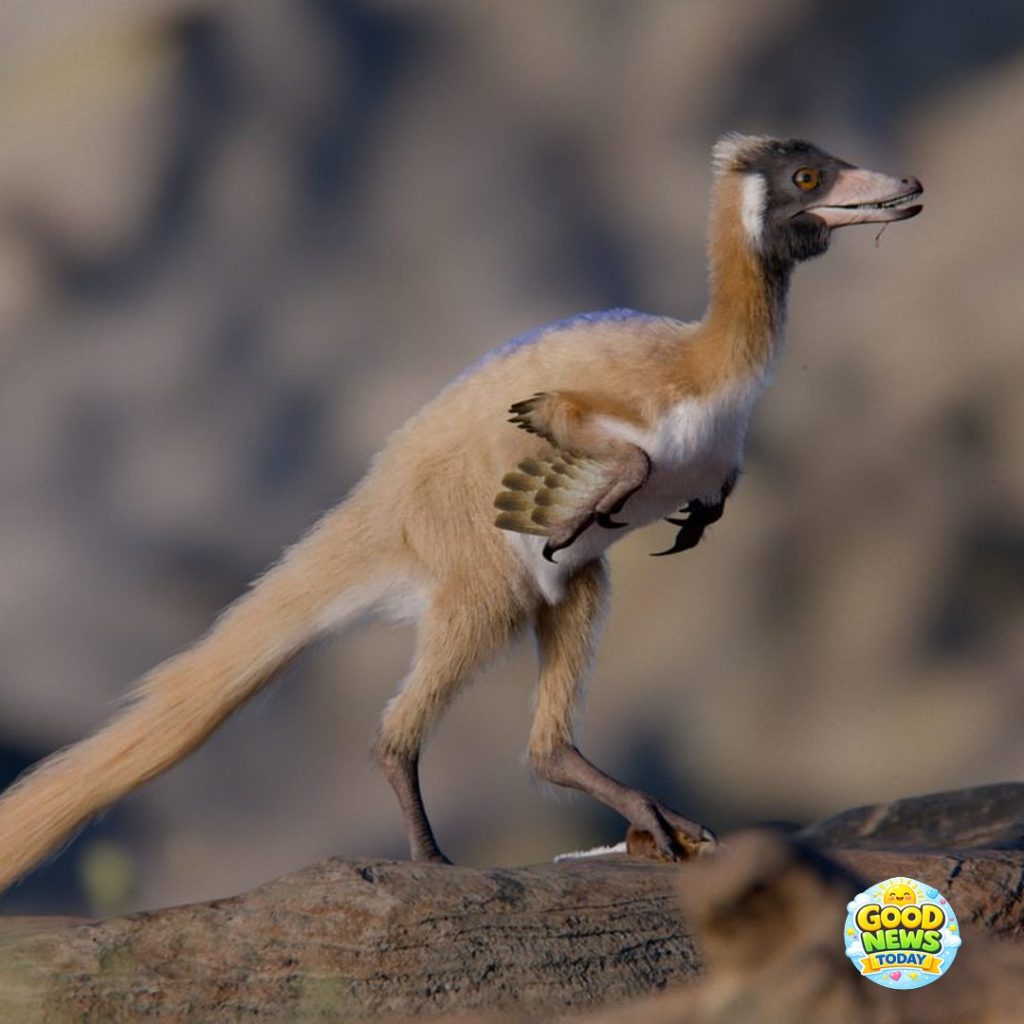
The remarkable discovery of a 90 million-year-old fossilized remains of a tiny bird-like dinosaur is making waves in the scientific community, helping to reshape our understanding of prehistoric life.
A collaborative team of scientists from North and South America has introduced Alnashetri cerropoliciensis as the “missing link” not between dinosaurs and birds, but rather in unraveling the mysteries surrounding a diverse group of small, ancient creatures.
The discovery of this nearly complete skeleton is being hailed as a “paleontological Rosetta Stone,” offering crucial insights into a group of bird-like dinosaurs known as Alvarezsaurs. These fascinating creatures are characterized by their tiny teeth and short arms, which ended in a distinctive single large thumb claw.
For many years, Alvarezsaurs remained enigmatic, primarily due to most well-preserved fossils being found in Asia, leaving South American records scant and challenging to interpret. However, in 2014, an international team led by Professor Peter Makovicky from the University of Minnesota Twin Cities and Dr. Sebastian Apesteguía from Argentina uncovered the nearly complete fossil in northern Patagonia.
This more complete specimen has allowed researchers to meticulously analyze and reconstruct the unique anatomy of the group. Over the past decade, the team has dedicated themselves to carefully preparing and assembling the delicate fossils, ensuring the small bones remain intact.
“Transitioning from fragmentary skeletons that are tough to interpret to having a nearly complete and articulated animal is akin to discovering a paleontological Rosetta Stone,” explained Dr. Makovicky. “This find provides us with a reference point that helps us accurately identify other incomplete specimens and trace evolutionary changes in anatomy and body size.”
The discovery of this nearly complete skeleton has opened new avenues for understanding how its lineage evolved, diminished in size, and dispersed across ancient landscapes. “We have already uncovered the next chapter of the Alvarezsaurid story, which is currently being prepared in the lab,” shared Dr. Makovicky.
Microscopic examinations of the bones revealed that the creature was an adult, at least four years old. While the largest species in this group can reach the size of an average human, Alnashetri itself was remarkably small, weighing under 2 lbs., making it one of the tiniest dinosaurs identified in South America.
Interestingly, unlike its later relatives, Alnashetri featured longer arms and larger teeth. According to the related research, this indicates that some Alvarezsaurs began evolving into smaller forms long before they developed the specialized traits believed to be suited for an ant-eating diet.
The researchers attribute the global distribution of these fascinating dinosaurs to the breakup of the ancient supercontinent Pangea. “After more than 20 years of work, the La Buitrera fossil area has provided us with exceptional insights into the world of small dinosaurs and other prehistoric life,” they concluded, celebrating this significant leap in paleontological knowledge.