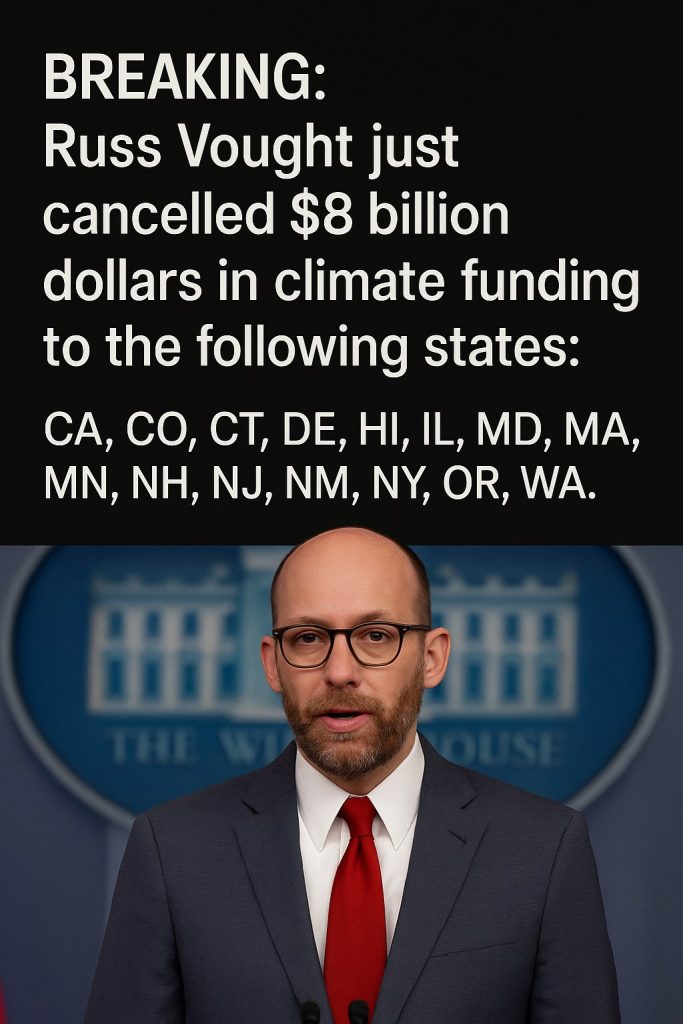
In a move that has sent shockwaves through the environmental community, Russ Vought, the former director of the Office of Management and Budget, has reportedly cancelled a staggering $8 billion in climate funding aimed at various states, including California, Colorado, Connecticut, Delaware, Hawaii, Illinois, Maryland, Massachusetts, and Minnesota. This decision, which came to light through a viral social media post by Spencer Hakimian, has ignited a fierce debate about the future of state-level climate initiatives and their funding.
This abrupt cancellation comes amid rising concerns about climate change, as states across the nation strive to implement measures to mitigate its devastating impacts. Experts have warned that climate funding is essential for supporting renewable energy projects, sustainable infrastructure, and disaster readiness, particularly in areas frequently affected by climate-related disasters.
The states affected by this funding cut have invested heavily in green technology and sustainable practices. California, for instance, has set ambitious goals to reduce its carbon emissions by 40% below 1990 levels by 2030. Colorado has also been a leader in renewable energy efforts, aiming to reach 100% carbon-free energy by 2040. The sudden withdrawal of federal support for these ambitious projects raises alarms, particularly at a time when scientific studies emphasize the urgent need for action in our battle against climate change.
Reactions to the cancellation have been swift, with a myriad of politicians, environmentalists, and activists condemning the decision. California Governor Gavin Newsom criticized the move as “a blatant attack on our progress,” calling on Congress to find alternative sources of funding. Meanwhile, environmental advocacy groups expressed their dismay, asserting that the funding was imperative for states committed to the transition toward clean energy.
The importance of federal funding in bolstering state initiatives cannot be understated. Many states rely on these financial resources to implement costly projects that would otherwise be unfeasible. For instance, projects such as advancing solar energy capabilities, improving public transportation, and protecting vulnerable coastal regions require substantial funding—often exceeding state budgets alone. The repercussions of this funding cancellation could mean stalled projects and job losses in the green sector.
Interestingly, while Vought’s cancellation has faced backlash, it also raises questions about the administration’s stance on climate policy moving forward. Critics argue that this decision indicates an intention to steer resources away from climate action at a time when international negotiations, such as the latest climate summit in Scotland, emphasize increased commitment to sustainability.
The debate surrounding climate funding exemplifies a broader political rift in the United States. As cities and states take action against climate change independently, the federal government’s inconsistent support raises significant concerns about strategic preparedness for the environmental challenges looming ahead.
As the states targeted by the funding cancellation rally to defend their climate initiatives, citizens continue to voice their concerns on social media. This may become a rallying point for those advocating for urgent climate action, as more individuals recognize the essential role of climate funding amid an increasingly volatile climate.
Where to Learn More
- U.S. Cancels $8 Billion Climate Funding for Several States – Reuters
- Climate Funding Cancellation Stirs Controversy – The New York Times
- What the Cancellation of Climate Funding Means for States – The Washington Post