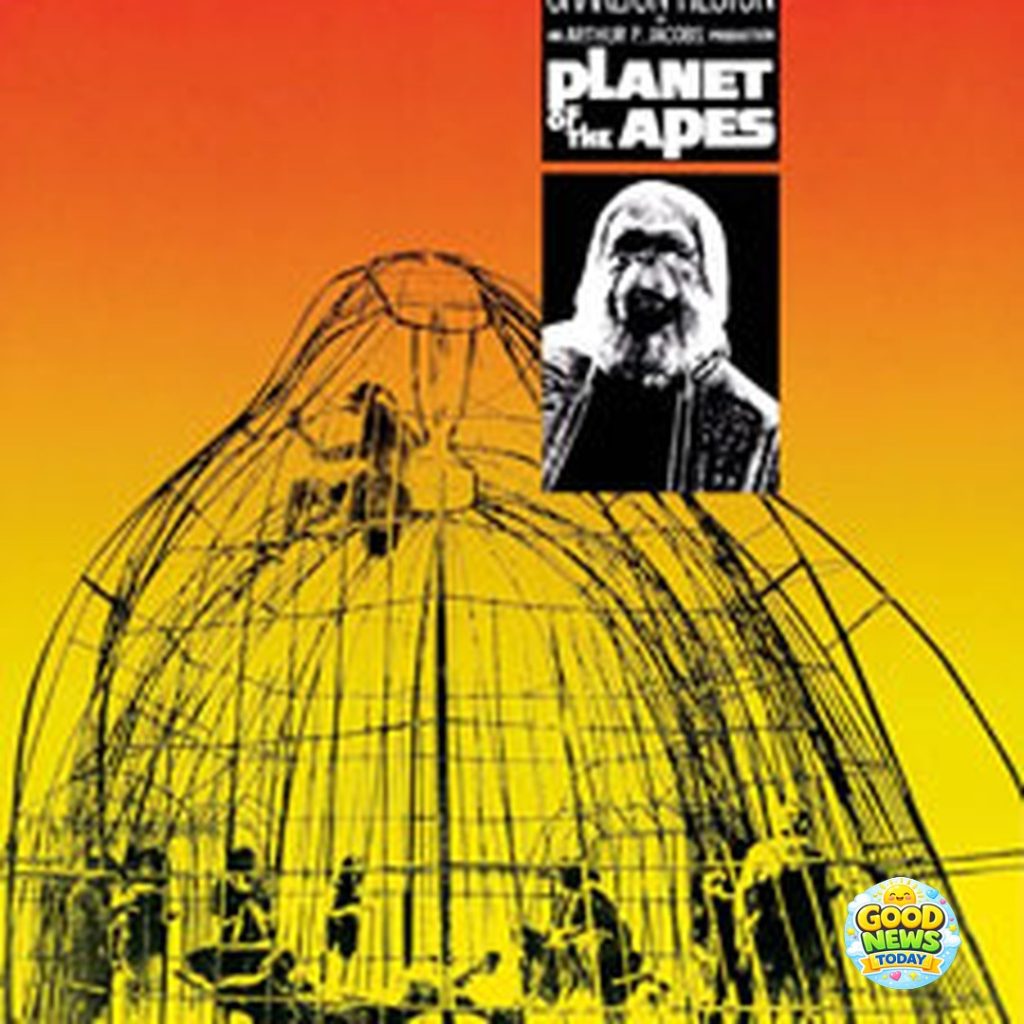
Today marks an exciting milestone: it’s been 58 years since the iconic film Planet of the Apes, featuring Charlton Heston, made its debut in theaters. The story follows a crew of astronauts who crash-land on a mysterious planet set in the distant future. Initially, the planet seems barren and lifeless, but the crew soon discovers a fascinating society where apes have evolved to possess human-like intelligence and speech. This groundbreaking film not only captivated audiences but also achieved remarkable success at the box office, amassing a lifetime domestic gross of $33.3 million. Its innovative prosthetic makeup, crafted by artist John Chambers, set a new standard in the film industry, and the score received high praise from both viewers and critics alike.
As the astronauts navigate the desolate landscape in search of answers, a thrilling revelation unfolds. Charlton Heston portrays Mission Commander Dr. George Taylor, who gradually realizes that they have actually landed on Earth, where human civilization has been devastated by a nuclear war. Released just four years after the Cuban Missile Crisis, the film sparked imaginations and discussions about the potential future of our planet in the event of conflict with the Soviet Union. In the thought-provoking narrative crafted by screenwriters Michael Wilson and Rod Serling, apes emerge as the dominant, intelligent beings on this transformed Earth. The film’s unforgettable conclusion features Taylor uncovering the Statue of Liberty, partially buried in the sand near the ocean, confirming the shocking truth of their situation.
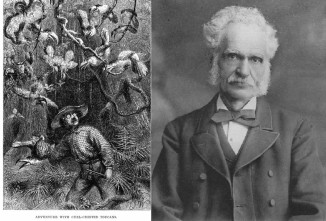
In addition to this cinematic celebration, today also honors the extraordinary life of Henry Walter Bates, born 201 years ago. This remarkable naturalist and explorer hailed from Leicester and is renowned for his exceptional natural travel accounts. Throughout his illustrious career in the Amazon, Bates collected an astonishing 14,712 specimens, primarily insects, which he sent back to England for scientific study. His book, The Naturalist on the River Amazons, was lauded by Charles Darwin as “the best book of Natural History Travels ever published in England.”
Coming from a modest, literate middle-class family, Bates formed a lasting friendship with fellow naturalist Alfred Russel Wallace. Together, they embarked on an adventurous journey up the Amazon Basin, fueled by a passion for discovery and a list of specimens they aimed to collect. After departing from Liverpool, they reached Belem in late May 1848, with Bates continuing his exploration along the Tocantins River and the Amazon, eventually establishing a base camp at Tefe to begin his collection of insect specimens.

Bates’ research on Amazonian butterflies led to his pioneering work on mimicry, particularly the phenomenon now known as Batesian mimicry, where a harmless species mimics the traits of a harmful or unpalatable one. After 11 fruitful years in the Amazon, Bates returned home, dividing his impressive collection of specimens across three ships for the journey back. His incredible contributions to science and the natural world continue to inspire and educate to this day.