
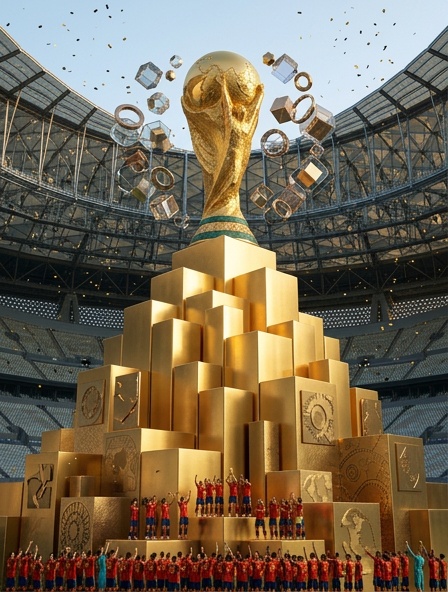
The 2026 FIFA World Cup, held across the United States, Canada, and Mexico, has been much lauded for its grandeur, record-breaking attendance, and seamless international collaboration. But beneath the spectacle lies a sobering reality — the tournament has inadvertently exposed a critical geopolitical truth: **globalization offers no insurmountable barrier to the resurgence of neofascism, authoritarianism, and right-wing nationalism**.
As nations rally together for a celebration of sport, troubling signs emerge from the political landscape. Throughout the tournament, populist leaders and nationalist groups have leveraged the event to promote divisive agendas. In some host cities, far-right factions used World Cup-driven momentum to amplify rhetoric targeting immigrants, minorities, and political opposition. The United States, for example, saw a rise in hate speech incidents online and in the streets, with some influential figures openly criticizing what they view as “cultural encroachment” under the guise of international unity.
Experts say that the globalized nature of the World Cup has failed to act as a counterbalance to these movements. “The very idea of connecting nations through football was supposed to foster unity and mutual understanding,” explains Dr. Lisa Chen, a political scientist specializing in nationalism. “Instead, it underscores how deeply embedded these ideologies are, capable of flourishing regardless of global spectacles or economic integration.“
Historical patterns suggest that moments of international cooperation often coincide with heightened nationalist sentiments when political figures seek to capitalize on these events for their own agendas. The 2026 World Cup vividly demonstrates that **the interconnectedness of the global economy, culture, and sports does not necessarily translate into political moderation or openness**.
In fact, some say that globalization’s superficial veneer masks underlying struggles for political and cultural dominance. The tournament’s widespread media coverage and international fan engagement create a fertile ground for propagandists and extremist groups to spread their narratives. Social media platforms buzz with messages that use the event as a backdrop for ideologically charged rhetoric, further polarizing societies.
What the 2026 World Cup reveals is that **the fight against neofascism and right-wing nationalism requires more than just global cooperation**. It demands active, localized resistance, nuanced understanding of cultural identities, and investment in social cohesion. As the world celebrates the beautiful game, policymakers, civil society, and fans alike must confront the uncomfortable truth: **globalization alone is insufficient to curb dangerous ideologies that seek to divide and conquer**.
Moving forward, experts emphasize that a deeper effort is needed to address the root causes of these resurgence movements — economic inequality, political disenfranchisement, and cultural anxieties. The 2026 World Cup serves as a stark reminder that *ideologies do not fade with global events; they evolve and adapt, often fueled by the perceived threats to national identity*. As nations continue to open their borders and celebrate international camaraderie through sports, they must also recognize the imperative of safeguarding democratic values from the insidious rise of extremism.
Where to Learn More
- Football and Fascism: The Political Risks of International Sporting Events – Foreign Affairs
- How the 2026 World Cup Exposes the Rise of Far-Right Nationalism – The Guardian
- The Political Impact of Global Sports Events – Brookings Institution
- The Ideology Behind the 2026 World Cup’s Political Fallout – Al Jazeera
- Pew Research Center: Nationalism and Globalization in 2026