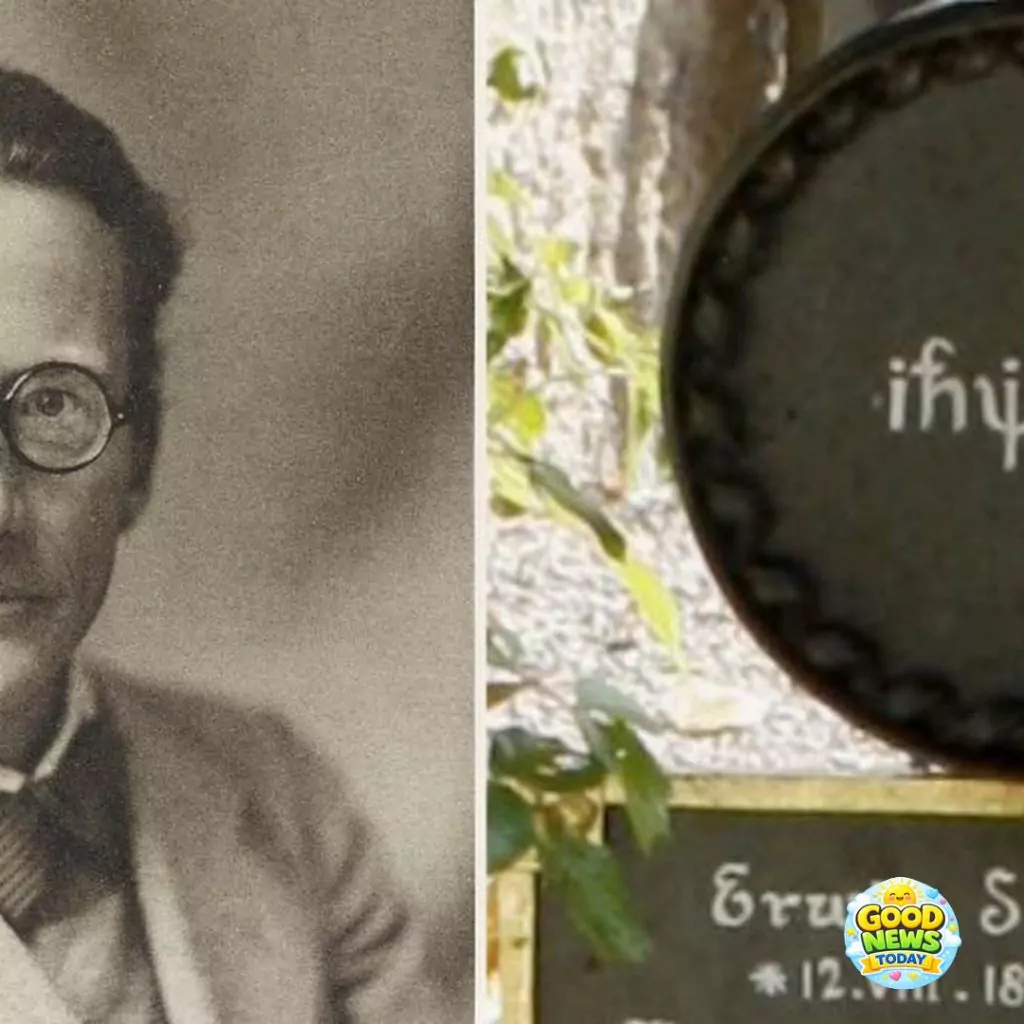
One hundred years ago, the brilliant physicist Erwin Schrödinger introduced his groundbreaking theory of wave mechanics, marking a pivotal moment in the evolution of quantum theory that ultimately earned him a Nobel Prize. Although he was raised in Austria, his later move to Ireland defined his legacy. His renowned Schrödinger equation offered a method for calculating the wave function of a system and illustrated how it changes over time, paralleling the role of Newton’s second law in classical mechanics. You can even find this iconic equation inscribed on his tombstone.
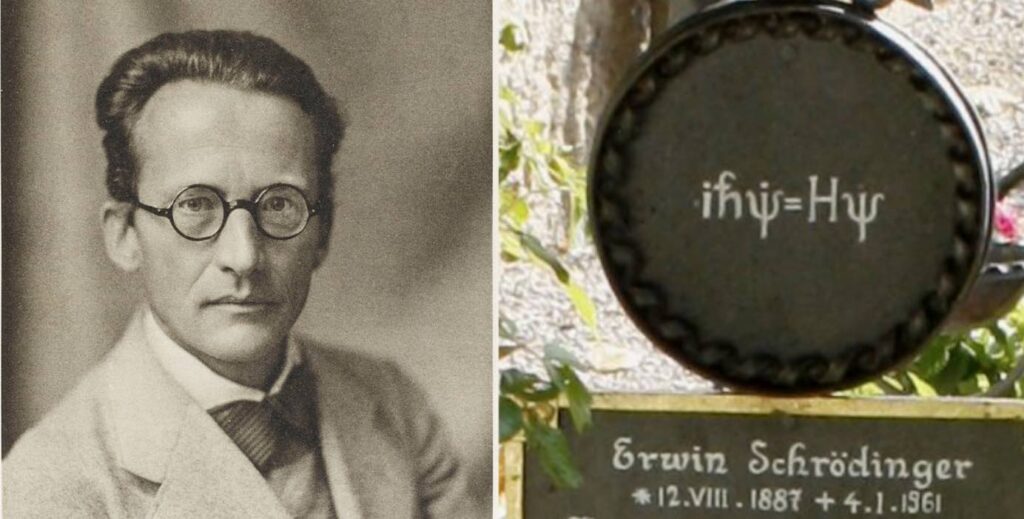
Schrödinger contributed extensively to various domains of physics and made numerous attempts to formulate a unified field theory. He is perhaps best known for his thought experiment involving Schrödinger’s cat, which illustrates how two possible outcomes can coexist simultaneously, representing a blend of multiple states corresponding to different choices.
In his influential book, What Is Life?, Schrödinger explored genetics, examining the essence of life through the lens of physics. He was deeply interested in the philosophical dimensions of science, often integrating ancient philosophies and Eastern concepts, ethics, and spirituality into his work. While he identified as an atheist, he had a profound fascination with Eastern religions and pantheism, viewing his scientific endeavors as an intellectual exploration of the divine.
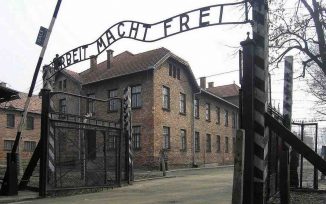
On this day, we also remember significant historical events. Eighty-one years ago, the Auschwitz-Birkenau Nazi concentration and death camps were liberated by the Soviet Red Army in Poland. This day is now recognized as International Holocaust Memorial Day, observed by the United Nations and several countries, including the UK, Germany, Poland, and Denmark.
Although this event was termed “Liberation,” it’s important to note that the German staff had already fled, leaving behind 7,000 prisoners who were too ill to be moved. It was these courageous individuals who were freed when the Red Army arrived, often accompanied by the Polish Red Cross.
In the spirit of remembrance, UNESCO has initiated educational programs in 85 countries, aiming to promote Holocaust education and ensure that such atrocities are never repeated.
Additionally, we celebrate the birth of Eugène Viollet-le-Duc, who was born 212 years ago in Paris. Renowned as an architect, he gained acclaim for his restoration of numerous significant medieval buildings in France, including the iconic Notre Dame, Mont Saint-Michel, the Basilica of Saint-Denis, and even the Lausanne Cathedral in Switzerland. His contributions extended beyond these projects; he also played a role in the construction of the Statue of Liberty and authored over 100 works on architecture.
When the Strasbourg Cathedral’s spire was destroyed during a conflict between Prussia and France, Viollet-le-Duc ingeniously acquired the plans to the Prussian designs, advocating for their reconstruction with his own vision, thereby preserving the historical integrity of this magnificent structure.